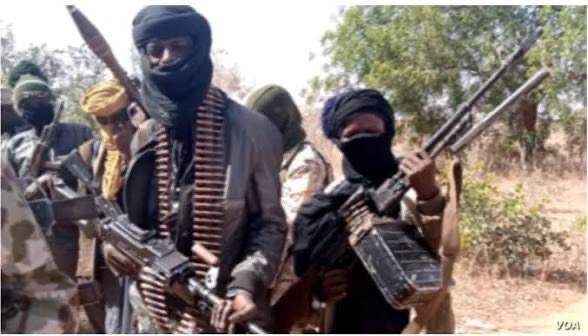
Nigerian Air Strikes Eliminate Key ISWAP Escort Commander and Nine Fighters in Sambisa Forest
In a significant blow to the Islamic State West Africa Province (ISWAP), the air component of Operation Hadin Kai (OPHK) has neutralized nine terrorist fighters, including a specialized commander responsible for escorting senior leaders, during precision strikes in the Sambisa Forest on Saturday, August 8, 2026.
Intelligence sources reported that the attacks targeted the Yuwe and Sabil Huda enclaves, areas long used by ISWAP as operational bases and transit points deep within the expansive forest in Borno State.
Among those eliminated was Qaid Abu Khalid Al Muhajir, an ISWAP commander originally from Maiduguri, whose role as a VIP escort specialist made him a critical facilitator of high-level movements within the group’s network.
According to detailed intelligence assessments shared with security analyst Zagazola Makama, Abu Khalid specialised in coordinating the safe passage of senior ISWAP commanders and other high-value members.
He possessed extensive knowledge of navigation routes, tactical pathways, and movement patterns linking major enclaves across the Sambisa corridor.
His expertise reportedly allowed senior operatives to shift between hideouts with reduced risk of detection by security forces.
By managing special convoys and escort duties, he served as a key enabler of the group’s internal mobility—a capability that becomes increasingly vital as military pressure intensifies on fixed locations.
Security sources described his loss as particularly damaging because it removes institutional knowledge of terrain and routes that are difficult to replace quickly.
The strikes are also believed to have disrupted fighters linked to previous ambushes against Nigerian troops along the Bita–Yamtage axis in Gwoza Local Government Area.
Nine ISWAP fighters were confirmed neutralized in the operation, while several others sustained injuries of varying severity.
Post-strike assessments indicate the attacks may have affected a wider network of operatives active across both the Sambisa Forest and the adjoining Gwoza axis.
These latest strikes form part of an ongoing campaign by the Nigerian military to degrade ISWAP and Boko Haram command structures, logistics, and freedom of movement in the North-East.
The Air Component of Operation Hadin Kai continues to rely on intelligence, surveillance, and reconnaissance (ISR) to identify and target leadership nodes, specialized facilitators, and logistics hubs with precision munitions.
Military authorities have emphasized that the focus remains on disrupting the ability of terrorist groups to move senior personnel safely between enclaves while supporting ground troops operating in the same theatre.
Follow-up intelligence exploitation and surveillance are expected to determine the full extent of the damage and track any surviving members of the affected cells.
The operation comes against a backdrop of intensified kinetic and intelligence-driven efforts across Borno State, where Sambisa Forest has remained a persistent stronghold for insurgent groups for more than a decade.
Successive precision strikes targeting specialized roles—rather than only large gatherings—reflect a strategy aimed at steadily eroding the organizational resilience of ISWAP.
Security sources indicate that the Nigerian Army and Air Component will maintain sustained ISR missions in support of ground operations throughout the Sambisa, Gwoza, and surrounding areas.
The emphasis on accurate targeting of leadership and specialized networks is designed to compound the effects of ground offensives and further restrict the operational space available to terrorist elements.
While the full impact of Abu Khalid’s elimination will become clearer in the coming weeks, the removal of a mobility specialist with deep knowledge of the forest’s routes represents a tangible setback for ISWAP’s ability to protect and relocate its senior ranks under increasing military pressure.
The fight against insurgency in the North-East continues to demand both tactical precision and long-term commitment. Saturday’s strikes underscore the military’s determination to keep applying that pressure where it hurts most — on the networks that keep terrorist command structures mobile and intact.
 politics
 Adebayo Challenges Tinubu: Where Is Subsidy Money? Come Out and Account for It
 politics
 NDC Wins Logo Battle as Abuja Court Orders INEC to Use Modified Design
 news
news Atiku Exposes Tinubu’s FAAC Scam: Bigger Naira, Poorer Nigerians
 news
news Police Arrest Hafsat Abubakar Over Fake Fintech Shutdown Document Circulated Online
 politics
 Sowore Declares Peter Obi Yelwata Blockade Government-Sponsored Political Attack
How do you feel about this news?
Community Additions
Have a news tip, correction, or extra context about this story? Post it below instantly. All submissions appear live on this screen immediately.