
Amadi: Tinubu’s Team Untouchable in Nigeria’s Sham Anti-Corruption Fight
Abuja, July 18, 2026 - In a development reigniting fierce national discourse on selective justice and political vendettas, a Nigerian court has ordered the forfeiture of assets linked to former Attorney General of the Federation (AGF) and Minister of Justice, Abubakar Malami.
The ruling, spotlighted in a compelling ARISE News panel discussion, has drawn sharp analysis from governance expert Dr. Sam Amadi, who argues that Nigeria’s anti-corruption crusade often serves as a tool for political retribution rather than genuine accountability.
Dr. Amadi, Director of the Abuja School of Social and Political Thoughts, did not mince words during the ARISE Prime Time segment. “Those forfeiting their assets are those who have left government,” he stated pointedly.
Referencing Malami’s case, Amadi suggested that proximity to power shields serving officials: “If Malami was still working with this government, nothing will happen to him.”
He extended the critique to high-profile figures, noting the Senate President’s unresolved EFCC cases and the pattern of “unprogressive cases” against many in the current administration.
Amadi’s remarks tap into long-standing public skepticism about the Economic and Financial Crimes Commission (EFCC) and broader anti-graft institutions.
He emphasized that a sincere war on corruption demands “transparent and accountable systems,” not episodic prosecutions that appear timed to political cycles.
“Oftentimes, the war against corruption is a political fight back,” he observed, a view echoed by panelists and viewers reacting to the broadcast.
This latest forfeiture order against Malami — who served prominently under former President Muhammadu Buhari — comes amid ongoing scrutiny of high-level officials from previous regimes.
Critics argue it fits a familiar script: aggressive pursuit of opposition or ex-insiders while cases involving current power holders languish.
Supporters of the administration, however, frame such actions as evidence of a renewed commitment to cleaning house, regardless of political affiliation.
Nigeria’s battle against graft has produced mixed results over the years. Successive governments have touted high-profile convictions and asset recoveries, yet Transparency International rankings and domestic perceptions consistently highlight challenges with independence, resources, and political interference.
Amadi’s intervention underscores a key tension: without systemic reforms—stronger judicial independence, whistleblower protections, and depoliticized agencies—public trust remains elusive.
The timing of the Malami ruling amplifies these debates, especially as Nigerians grapple with economic hardships, insecurity, and questions of governance equity.
Social media reactions to the ARISE clip reflect polarized sentiments: some hail it as overdue justice, while others see it as selective enforcement designed to distract from present failures.
Dr. Amadi’s prescription is clear — move beyond “fight back” prosecutions toward institutional integrity.
Establishing genuinely independent anti-corruption bodies, digitizing public procurement, and ensuring swift, even-handed justice could transform rhetoric into results.
Until then, cases like Malami’s risk deepening cynicism rather than restoring faith in democratic institutions.
As Nigeria navigates complex political transitions and socio-economic pressures, moments like this panel discussion serve as vital public square conversations.
Whether the Malami forfeiture marks a genuine breakthrough or another chapter in selective accountability will depend on how authorities handle similar cases across the political divide.
 politics
 Adebayo Challenges Tinubu: Where Is Subsidy Money? Come Out and Account for It
 politics
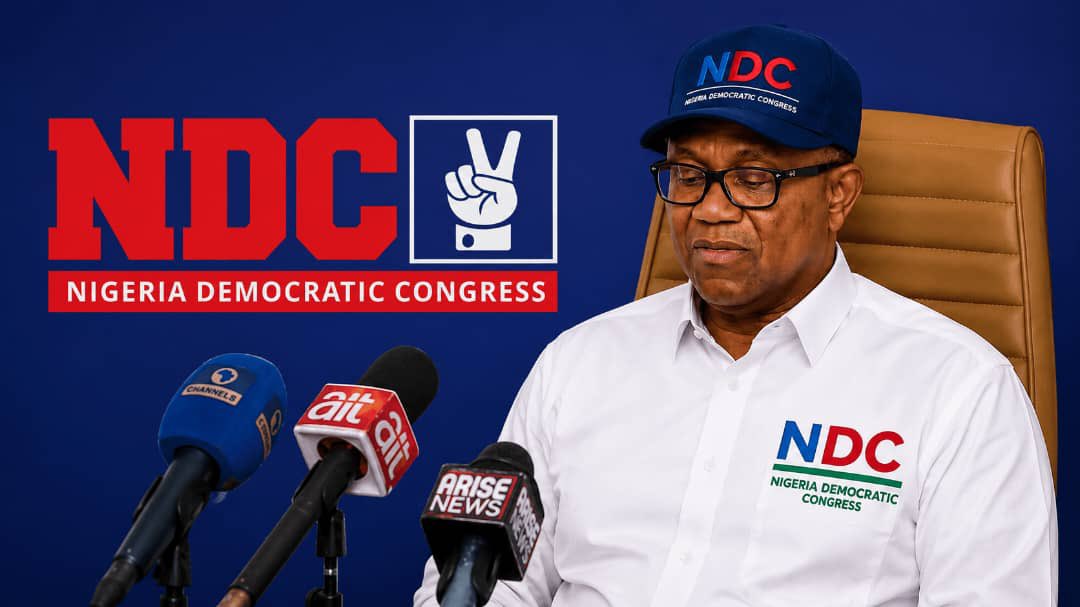
 NDC Wins Logo Battle as Abuja Court Orders INEC to Use Modified Design
 news
news Atiku Exposes Tinubu’s FAAC Scam: Bigger Naira, Poorer Nigerians
 news
news Police Arrest Hafsat Abubakar Over Fake Fintech Shutdown Document Circulated Online
 politics
 Sowore Declares Peter Obi Yelwata Blockade Government-Sponsored Political Attack
How do you feel about this news?
Community Additions
Have a news tip, correction, or extra context about this story? Post it below instantly. All submissions appear live on this screen immediately.