Fight Corruption, Not the Masses: Why Nigeria Must Restore a Managed Fuel Subsidy By Afolabi Olaiya.
The question Nigeria must answer is not whether corruption existed in the fuel-subsidy system. It did. The real question is whether ordinary Nigerians should be punished because government failed to stop the people stealing from that system.
They should not.
Fuel is not a luxury in Nigeria. It is woven into nearly every part of daily survival. It moves food from farms to markets, powers generators for homes and small businesses, carries workers to their jobs, and determines the cost of almost everything people buy.
When fuel becomes unaffordable, the effect does not stop at the filling station. It spreads through transport fares, food prices, school fees, rent, production costs, and the fragile budgets of millions of families.
That is why the removal of the fuel subsidy has become far more than a policy adjustment. It has become one of the defining sources of pain in the lives of Nigerians. The cost-of-living crisis that followed has crushed purchasing power, shuttered small businesses, and placed basic necessities beyond the reach of many households.
A government is created to shield its citizens from avoidable hardship, not to expose them to it in the name of economic theory. Its first duty is the welfare of the people, especially when global forces and domestic failures threaten their ability to live with dignity.
Nigeria did not have a subsidy problem as much as it had a corruption problem.
For years, the argument against subsidy was built around fraud, inflated claims, false import records, smuggling, and a network of powerful beneficiaries who turned a public-support mechanism into private profit.
Those allegations should have led to investigations, prosecutions, transparent audits, and institutional reform. Instead, the state chose the easier route: remove the support and pass the full burden to the people.
That is not reform. It is surrender.
When a roof leaks, a responsible homeowner repairs the leak. He does not burn down the house and congratulate himself for solving the problem. In the same way, the existence of criminals within the subsidy regime was never a convincing reason to abolish a policy that helped millions of citizens survive.
The proper response was to identify the thieves, recover public funds, secure the borders, digitize the supply chain, and prosecute everyone involved—whether they wore corporate suits, held political office, or occupied regulatory agencies.
The Nigerian state has security agencies, financial-intelligence institutions, customs authorities, regulators, and the legal machinery required to do this work. If these institutions could not stop fraud in the subsidy system, that failure should have been confronted directly. It should not have become an excuse for making fuel unaffordable for a population already battling unemployment, inflation, weak electricity supply, and inadequate public transport.
The consequences of subsidy removal are now plain. Prices of food, transport, and essential goods rose sharply because fuel sits at the center of the Nigerian economy. Farmers, traders, artisans, transporters, and small-scale manufacturers have all been forced to transfer rising energy costs to consumers. Families that were barely coping before are now making impossible choices between feeding their children, paying rent, seeking medical care, or keeping a small business alive.
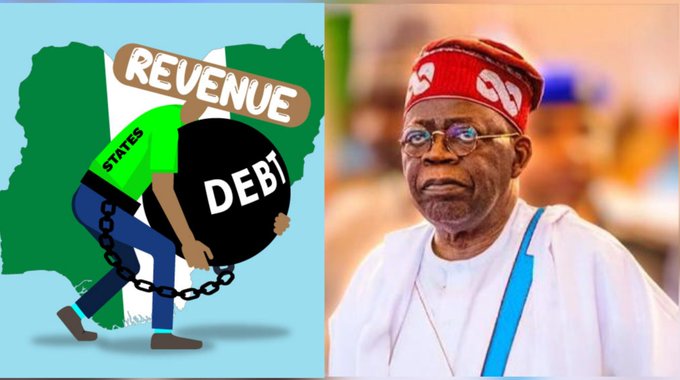
Yet the government often points to higher allocations to state governments as proof that subsidy removal is working. But bigger figures on paper do not automatically translate into better lives. An allocation that has lost much of its value to inflation cannot be presented as prosperity. Nigerians do not eat nominal revenue. They need food they can afford, transportation they can pay for, and incomes with genuine purchasing power.
The situation is especially harsh when measured against wages. It is economically unjust to expect Nigerians earning a minimum wage of *₦70,000* monthly to bear fuel prices shaped by international market realities. Citizens cannot be forced into global-price living while earning local poverty wages.
In countries where energy costs are high, workers often have stronger wages, functional public transport, stable electricity, food support, housing assistance, and social-welfare systems that cushion the impact. Nigeria offers too little of that protection.
It is therefore unreasonable to expect the average Nigerian family to absorb this shock without falling deeper into poverty.
The claim that subsidies are outdated or economically irrational also does not survive serious scrutiny. Across the world, governments intervene to protect strategic sectors and reduce the burden of essential costs on their people.
The United States supports agriculture, energy, technology, water systems, and other critical industries through various forms of public assistance and tax incentives.
The United Kingdom has repeatedly stepped in to cushion households during energy crises while maintaining support for transportation and public services.
Oil-producing countries such as *Saudi Arabia, Kuwait, Qatar,* and others also recognize that access to affordable energy is part of the social bargain between a state and its citizens. They use their natural resources to lower production costs, support local businesses, and make life more affordable at home.
Nigeria, an oil-producing country, should not be the tragic exception—the country where citizens pay punishing prices for a resource drawn from beneath their own soil.
No one is asking for a return to waste, secrecy, or criminal enrichment. Nigeria does not need a corrupt subsidy regime restored. It needs a transparent, tightly managed, technology-driven subsidy framework that puts citizens first and leaves no room for fraudsters.
Such a system must include full public disclosure of import and distribution records, real-time tracking of fuel supply, rigorous audits of marketers, decisive action against smuggling, and severe punishment for officials and private actors found guilty of sabotage.
Local refining capacity must also be strengthened so that Nigeria can reduce its dependence on imported petroleum products and the manipulation that often comes with it.
This is the position articulated by Atiku Abubakar. He has stated repeatedly that, if elected, he will restore a targeted subsidy focused on production and local refining rather than the previous import-based regime and that those who stole from the system must return the money.
In a country where the removal of subsidy has driven more households into poverty than any other single policy of recent years, that commitment addresses the lived reality rather than abstract fiscal theory.
Leadership is measured by the willingness to correct course when evidence shows a policy is destroying livelihoods. Ideological rigidity is a luxury a nation facing widespread precarity cannot afford.
Nigeria’s oil belongs first to Nigerians.
A competent state uses that resource to stabilize the cost of living for the many while ruthlessly eliminating the loopholes that enrich the few.
_*Continuing to demand that citizens absorb full global prices on poverty wages—while trillions still move under opaque labels* — *is not reform. It is abandonment.*_
The choice before the country is therefore clear. Repair the roof. Prosecute those who sabotaged it. Restore a managed, transparent form of support that protects ordinary people.
Or persist with a policy whose human costs are documented daily in the markets, the transport parks, and the quiet calculations of millions of households.
The people who abused the old system are not invisible. Many are known. The public deserves to know why those responsible for bleeding the country are not being pursued with the urgency shown in the removal of a lifeline for the poor.
Nigeria must correct this course. The government should restore a properly managed fuel subsidy while waging an uncompromising war against the corruption that distorted it.
Protecting citizens from unbearable energy costs is not weakness, populism, or economic backwardness. It is responsible governance.
The message to Aso Rock should be unmistakable: fight corruption within the subsidy regime—never the people.
I_am Afolabi Olaiya✍️✍️✍️
 politics
 Adebayo Challenges Tinubu: Where Is Subsidy Money? Come Out and Account for It
 politics
 NDC Wins Logo Battle as Abuja Court Orders INEC to Use Modified Design
 news
news Atiku Exposes Tinubu’s FAAC Scam: Bigger Naira, Poorer Nigerians
 news
news Police Arrest Hafsat Abubakar Over Fake Fintech Shutdown Document Circulated Online
 politics
 Sowore Declares Peter Obi Yelwata Blockade Government-Sponsored Political Attack
How do you feel about this news?
Community Additions
Have a news tip, correction, or extra context about this story? Post it below instantly. All submissions appear live on this screen immediately.