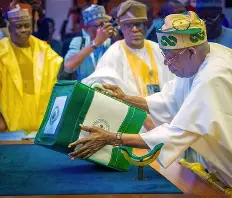
APC Desperately Defends ₦12.8 Trillion Election Slush Fund as "Vital Governance Tool" Amid Atiku's Scorching Allegations
In a sharp exchange highlighting the intensifying political heat ahead of Nigeria’s 2027 elections, the All Progressives Congress (APC) has vehemently rejected claims by former Vice President Atiku Abubakar that a massive ₦12.8 trillion Service-Wide Vote (SWV) in the 2026 federal budget represents a slush fund for President Bola Tinubu’s re-election campaign.
The controversy erupted following Atiku’s recent statements, amplified through his media team, questioning the dramatic increase in the SWV—from around ₦638 billion in earlier years to this significantly larger envelope.
Critics, including Atiku’s camp, argue the scale (described in responses as a roughly 1,900% jump in some contexts) lacks sufficient specificity, raising fears of misuse for political patronage or unaccountable spending.
In a detailed press statement issued on July 22, 2026, by APC National Publicity Secretary Felix Morka, the ruling party dismissed Atiku’s allegations as “highly mischievous” or born of “disturbing ignorance” of public finance principles.
Morka emphasized that Service-Wide Votes are a longstanding budgetary mechanism used globally for government-wide obligations and unforeseen expenditures post-budget approval.
“A Service-Wide Vote is not a secret fund or an illegal slush account, ” Morka asserted, accusing Atiku of projecting his own “sordid past” of alleged corruption and profligacy onto the Tinubu administration.
The statement portrayed Atiku as a “serial presidential contestant” lacking vision, resorting instead to “fake news and doomsday narratives.”
The APC highlighted tangible achievements under Tinubu’s Renewed Hope Agenda to counter the criticism, including:
- The Nigerian Education Loan Fund (NELFUND) aiding nearly two million students.
- Implementation of the new national minimum wage.
- Consumer Credit Scheme and Presidential Compressed Natural Gas (CNG) Initiative for affordability.
- Palliatives, infrastructure investments, healthcare, agriculture boosts, job creation, and tax reforms.
Nigeria’s 2026 Appropriation Act, passed after adjustments, is a massive document (reports cite figures around ₦58–68 trillion total expenditure depending on versions and supplements), focusing on consolidation, security, infrastructure, education, and health.
Service-Wide Votes, while expanded, fund specific needs like minimum wage arrears (hundreds of billions), contractor liabilities, pensions, immunisation programmes (e.g., GAVI), presidential air fleet logistics, intelligence agency facilities, and contingencies.
Official breakdowns and analyses from groups like BudgIT show allocations for legitimate cross-cutting priorities, though critics note challenges in transparency and tracking when funds are centrally managed.
Atiku’s media office responded in kind, demanding a full breakdown of projects, beneficiaries, and legal bases, arguing that vagueness turns a contingency tool into a potential abuse vector.
They dismissed the APC’s rebuttal as “intellectually bankrupt” and focused on insults rather than facts.
This clash underscores deep partisan divides in Nigeria’s fiscal politics. Proponents of the budget praise its emphasis on security (over ₦5 trillion in some allocations), capital projects, and economic recovery amid global challenges.
Detractors, including opposition voices and civil society budget watchers, continue to call for greater scrutiny of large envelope provisions to prevent duplication, waste, or political diversion—issues that have plagued Nigerian budgeting for years.
Opposition scrutiny meets ruling party defensiveness, with ordinary Nigerians caught in the middle, yearning for transparent governance that delivers real dividends—jobs, security, affordable living, and inclusive growth.
The Tinubu administration maintains it is transforming challenges into opportunities through reforms. Atiku and the ADC coalition position themselves as watchdogs demanding accountability.
The ultimate judge, as ever, will be the Nigerian people and their representatives in oversight roles.
 politics
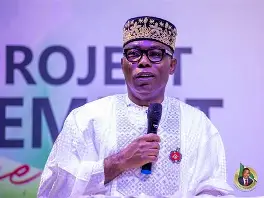
 Adebayo Challenges Tinubu: Where Is Subsidy Money? Come Out and Account for It
 politics
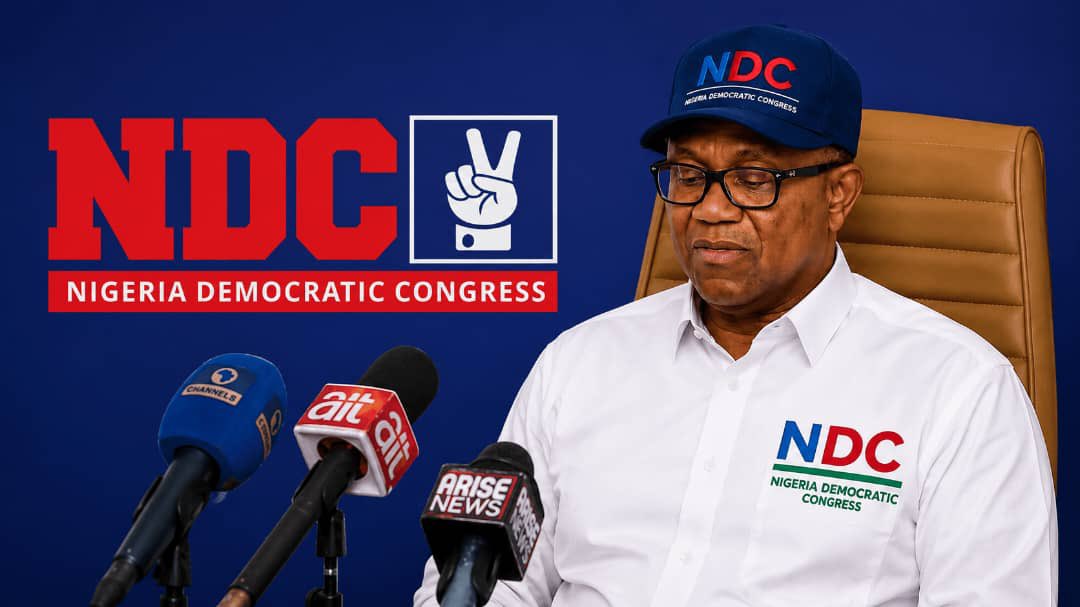
 NDC Wins Logo Battle as Abuja Court Orders INEC to Use Modified Design
 news
news Atiku Exposes Tinubu’s FAAC Scam: Bigger Naira, Poorer Nigerians
 news
news Police Arrest Hafsat Abubakar Over Fake Fintech Shutdown Document Circulated Online
 politics
 Sowore Declares Peter Obi Yelwata Blockade Government-Sponsored Political Attack
How do you feel about this news?
Community Additions
Have a news tip, correction, or extra context about this story? Post it below instantly. All submissions appear live on this screen immediately.