
Court Sets July 10 Judgment on Malami’s 57 Properties Forfeiture
ABUJA, Nigeria — In a significant development that underscores the Economic and Financial Crimes Commission’s (EFCC) continued push for asset recovery, a Federal High Court in Abuja has fixed July 10, 2026, for judgment in the high-profile suit seeking the permanent forfeiture of 57 properties linked to Abubakar Malami, former Attorney-General of the Federation and Minister of Justice.
The properties, valued at over N212 billion and located in Abuja, Kano, Kebbi, and Kaduna, are alleged to be proceeds of official corruption and abuse of office during Malami’s tenure under former President Muhammadu Buhari.
The EFCC had earlier secured an interim forfeiture order, marking a key milestone in one of the agency’s most prominent cases against high-profile public officials.
Justice Joyce Abdulmalik had initially scheduled judgment for Monday, July 6, but adjourned it to Friday, July 10, 2026.
Both parties adopted their final written addresses on May 26, setting the stage for this crucial ruling.
EFCC counsel Jibrin Okutepa, SAN, urged the court to grant the final forfeiture, relying on extensive evidence including a 47-paragraph affidavit and 46 exhibits.
He argued that Malami and other respondents failed to provide satisfactory proof of legitimate sources for the assets.
Malami’s legal team, led by Adedayo Adedeji, SAN, countered that the assets were legitimately acquired and urged the court to dismiss the application and vacate the interim order, describing the EFCC’s case as based on suspicion rather than concrete evidence.
This case forms part of the EFCC’s ongoing efforts to recover assets allegedly acquired through corrupt practices by former public officials.
The outcome could have far-reaching implications for accountability in Nigeria’s public service and send a strong message about the cost of abuse of office.
As Nigerians await the July 10 judgment, the case continues to fuel public discourse on transparency, the fight against corruption, and the role of the judiciary in high-stakes forfeiture matters.
A ruling in favor of the EFCC would represent a major victory for asset recovery initiatives, while a decision against could raise questions about evidentiary standards in such proceedings.
The development is being closely watched by legal experts, anti-corruption advocates, and the general public as Nigeria strives to strengthen institutions and restore public confidence in governance.
 politics
 Adebayo Challenges Tinubu: Where Is Subsidy Money? Come Out and Account for It
 politics
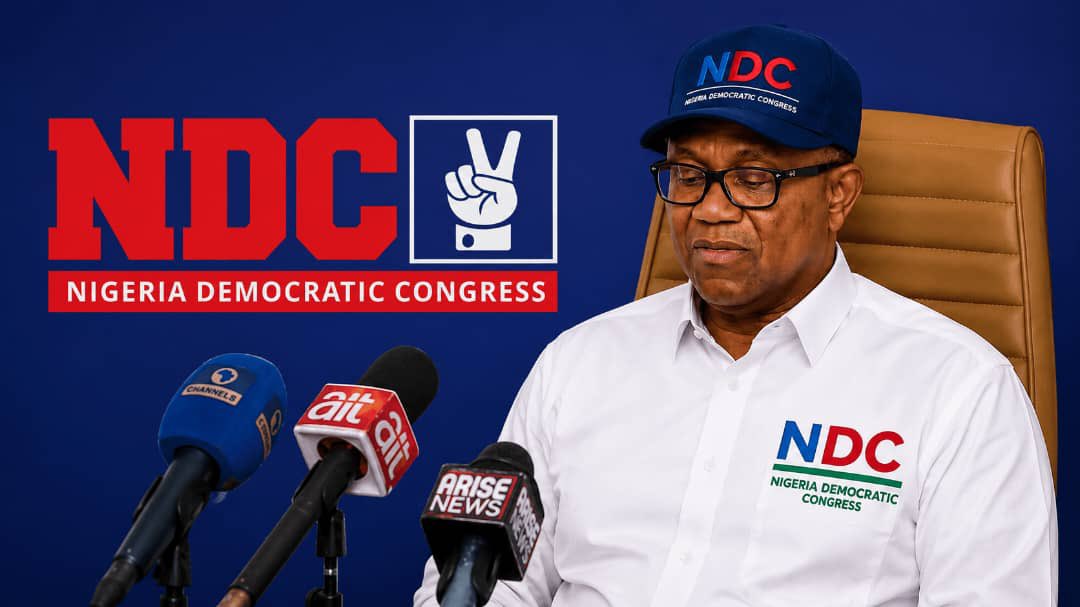
 NDC Wins Logo Battle as Abuja Court Orders INEC to Use Modified Design
 news
news Atiku Exposes Tinubu’s FAAC Scam: Bigger Naira, Poorer Nigerians
 news
news Police Arrest Hafsat Abubakar Over Fake Fintech Shutdown Document Circulated Online
 politics
 Sowore Declares Peter Obi Yelwata Blockade Government-Sponsored Political Attack
How do you feel about this news?
Community Additions
Have a news tip, correction, or extra context about this story? Post it below instantly. All submissions appear live on this screen immediately.