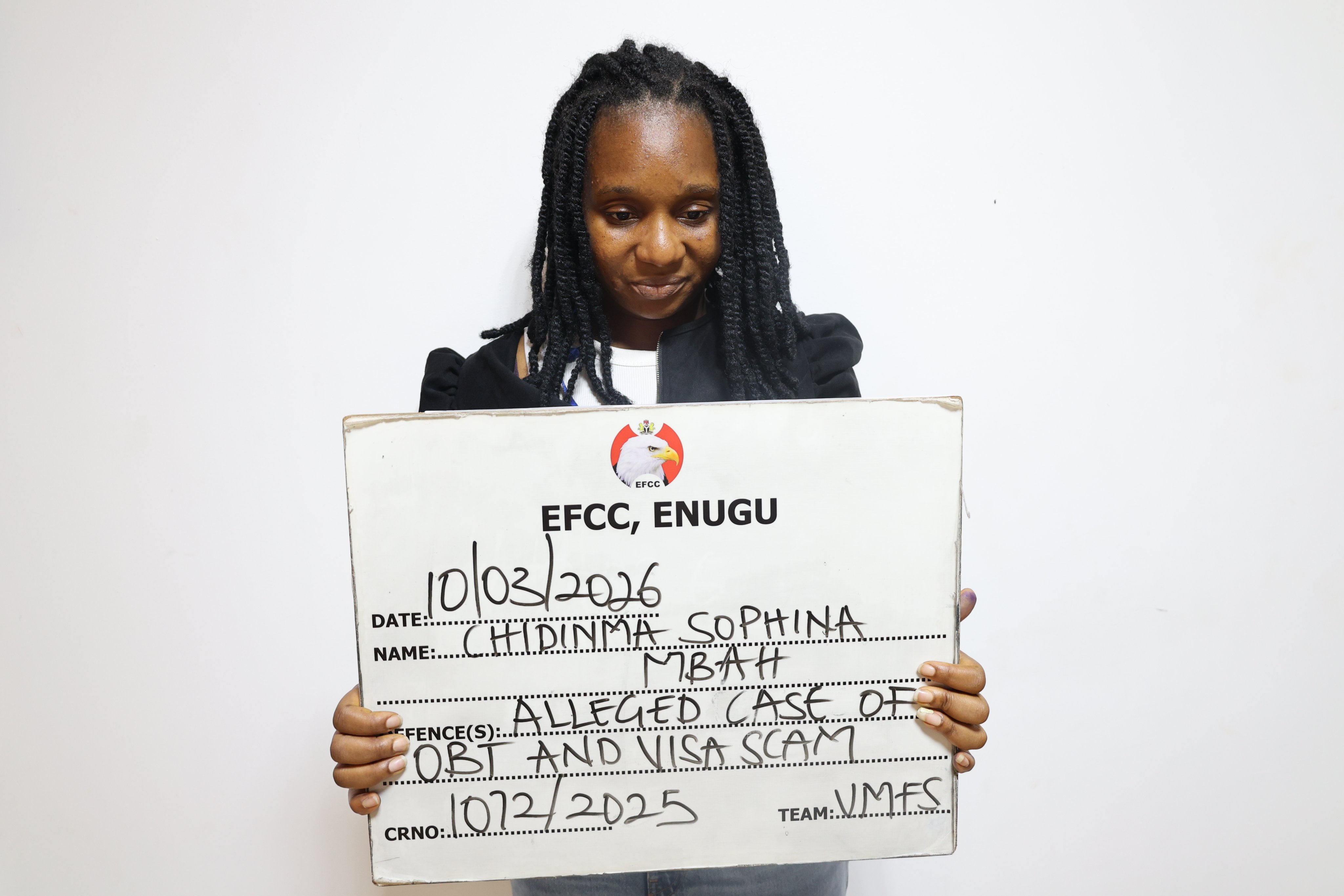
EFCC Arraigns TikTok Scammer for Bold Identity Theft in Enugu
Enugu, Nigeria — In a case that underscores the growing sophistication of online scams targeting desperate migrants, Nigeria’s Economic and Financial Crimes Commission (EFCC) has formally arraigned Mbah Chidinma Sophina before the Federal High Court in Enugu on multiple charges of identity theft, forgery, and possession of fraudulent documents.
Sophina, who earlier this year faced accusations of defrauding a petitioner of approximately N19 million and €8,370 under the guise of securing a UK Certificate of Sponsorship (CoS) for caregiving work, pleaded “not guilty” to the three-count federal charge on Thursday.
Justice F. O. Giwa-Ogunbanjo remanded her in the Nigerian Correctional Service facility and adjourned the matter to November 19, 2026, for full trial.
According to court documents read in open court, Sophina is accused of possessing a document falsely asserting she is Florence-Gweh Togba Doaryenneh — an identity she allegedly used with intent to defraud between January and April 2026.
A second count alleges she forged a “Last Minute Healthcare” card bearing the same stolen name in late 2023.
EFCC operatives recovered an identification card with Sophina’s photograph but the foreign-sounding name during a search of her residence.
Prosecutors say the documents formed part of a broader scheme to facilitate fraud.
Separately, Sophina is already being prosecuted in the Enugu State High Court on a two-count charge of stealing and obtaining money by false pretence involving the same N19 million sum.
She pleaded not guilty there as well and was granted bail, with that trial set for September 18, 2026.
The petitioner told EFCC investigators that he connected with Sophina on TikTok in 2024.
Seeking opportunities to relocate to the United Kingdom as a caregiver, he paid her the substantial sum for a promised Certificate of Sponsorship.
Instead of delivering, authorities say, Sophina allegedly failed to provide any documents, blocked the victim, and vanished — a pattern familiar in romance and job-related advance-fee scams that prey on Nigerians’ aspirations for better opportunities abroad.
At 33 years old, Sophina’s alleged activities highlight how social media platforms have become fertile ground for such schemes.
EFCC officials have repeatedly warned about the rise of visa and job fraudsters exploiting TikTok and other apps.
This case fits into the Enugu Zonal Directorate’s active pursuit of economic crimes, including internet fraud, investment scams, and identity-related offenses.
The zone has secured convictions and made multiple high-profile arrests in recent months, signaling intensified efforts to deter cybercriminals who erode public trust and drain victims’ life savings.
Identity theft, in particular, adds a dangerous layer: by assuming foreign personas or fabricating credentials, perpetrators not only steal money but potentially undermine legitimate immigration processes and international goodwill.
With Sophina remanded pending trial, the EFCC will now work to prove its case with documentary evidence and witness testimony. Defense counsel has indicated plans to file a bail application in the federal matter.
For victims of similar scams, the development offers a measure of hope that accountability is possible, even as it serves as a stark reminder: promises of quick visas or sponsorships, especially from unverified online contacts, demand extreme caution and due diligence.
As Nigeria continues its battle against economic and financial crimes, cases like this one illustrate both the ingenuity of fraudsters and the determination of agencies like the EFCC to stay one step ahead.
The outcome of Sophina’s trials could send a strong signal about the consequences of blending digital deception with stolen identities.
 politics
 Adebayo Challenges Tinubu: Where Is Subsidy Money? Come Out and Account for It
 politics
 NDC Wins Logo Battle as Abuja Court Orders INEC to Use Modified Design
 news
news Atiku Exposes Tinubu’s FAAC Scam: Bigger Naira, Poorer Nigerians
 news
news Police Arrest Hafsat Abubakar Over Fake Fintech Shutdown Document Circulated Online
 politics
 Sowore Declares Peter Obi Yelwata Blockade Government-Sponsored Political Attack
How do you feel about this news?
Community Additions
Have a news tip, correction, or extra context about this story? Post it below instantly. All submissions appear live on this screen immediately.