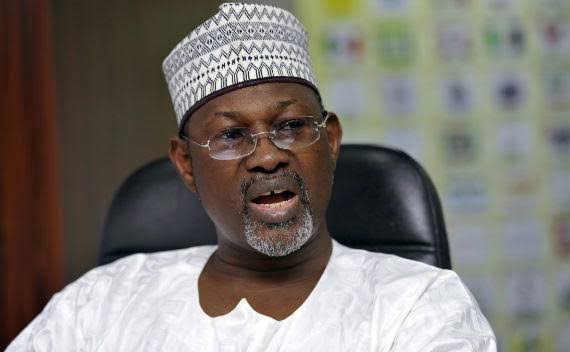
Blocking Opposition Could Kill Nigeria's Democracy - Jega
In a sobering intervention that cuts to the heart of Nigeria’s political future, renowned political analyst and former INEC Chairman Professor Attahiru Jega has issued a stark warning: Nigeria’s hard-earned democracy stands at grave risk if opposition parties are systematically weakened or prevented from contesting the 2027 general elections.
Speaking on ARISE News, Jega highlighted what he described as a growing perception of coordinated efforts to hobble opposition platforms ahead of next year’s polls.
“There is a growing perception that there is a coordinated effort to weaken opposition parties ahead of next year’s election,” Jega stated*.*
“If that is allowed to happen, it could mark the beginning of the end of democracy in Nigeria. I do not know who is orchestrating it, but it is important for the President, as the head of the country’s most powerful institution, to distance himself from it and discourage anything that undermines democracy.”
Professor Jega, who presided over the landmark 2011 and 2015 elections widely regarded as among Nigeria’s most credible in recent history, did not mince words.
His comments come against a backdrop of intense political maneuvering, including legal challenges to opposition parties, defections, internal crises within groups like the African Democratic Congress (ADC), and allegations of selective application of electoral rules.
Jega urged President Bola Tinubu to personally intervene and publicly reject any actions that shrink the democratic space.
For many observers, his intervention carries particular weight because of his institutional credibility and deep knowledge of Nigeria’s electoral history.
As expected in Nigeria’s polarized political arena, Jega’s remarks triggered passionate responses across social media. Some viewers praised his candor.
One user called it a “brilliant analysis,” while others saw it as a timely alarm bell against authoritarian drift.
However, significant pushback came from critics who reminded the public of Jega’s own past role.
Several commenters accused him of hypocrisy, pointing to his involvement in previous elections and suggesting he helped lay foundations for current challenges.
@ukeme67263 wrote: “Guess who is talking! The same man that declared brainless Buhari and put him in office! Shame on him.”
Others, like @hislawdship, argued: “He is the main architect of this menace. He laid the foundation while he was chairman of INEC. Tinubu only grabbed it.”
Some dismissed the warning as lacking evidence, attributing opposition weaknesses to internal failures rather than external sabotage.
Yet the underlying anxiety — that a dominant ruling party could render genuine competition impossible — resonated with many who fear a slide toward one-party dominance.
Nigeria heads into 2027 with an already fragmented opposition landscape marked by mergers, court battles, and high-profile defections.
Concerns about judicial influence on party registrations, selective prosecutions, and resource disparities between the ruling APC and smaller parties have fueled narratives of a tilted playing field.
Jega’s call for presidential leadership on this issue underscores a deeper truth: democratic health depends not just on laws but on the attitudes and actions of those in power.
A strong democracy, he implied, defeats opponents at the ballot box — not by diminishing the arena itself.
For ordinary Nigerians weary of economic hardship, insecurity, and governance challenges, the stakes could not be higher.
A vibrant opposition provides accountability, alternative ideas, and peaceful channels for change. Its absence risks apathy, unrest, or worse.
As one insightful commenter put it while sharing related footage:
“A strong government should seek to defeat opponents at the ballot box, not diminish the space for political competition. Nigeria needs more democracy, not less.”
Professor Jega’s warning serves as both diagnosis and prescription. Whether Nigeria’s leaders heed it may well determine if the country consolidates its democracy or risks backsliding.
In a nation with a turbulent political past, the coming months will test the maturity of its institutions and the commitment of its leaders to genuine pluralism.
 politics
 Adebayo Challenges Tinubu: Where Is Subsidy Money? Come Out and Account for It
 politics
 NDC Wins Logo Battle as Abuja Court Orders INEC to Use Modified Design
 news
news Atiku Exposes Tinubu’s FAAC Scam: Bigger Naira, Poorer Nigerians
 news
news Police Arrest Hafsat Abubakar Over Fake Fintech Shutdown Document Circulated Online
 politics
 Sowore Declares Peter Obi Yelwata Blockade Government-Sponsored Political Attack
How do you feel about this news?
Community Additions
Have a news tip, correction, or extra context about this story? Post it below instantly. All submissions appear live on this screen immediately.