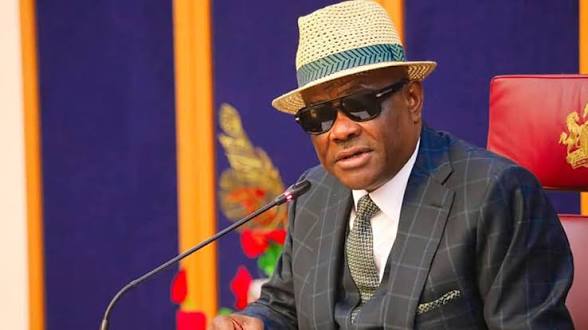
Wike Blasts Super Eagles: Nigerians Furious Over World Cup Snub
Abuja, Nigeria — In a blunt and unfiltered rebuke that captured the raw frustration of millions of football-mad Nigerians, Federal Capital Territory Minister Nyesom Wike has declared that the nation is “not happy” with the Super Eagles following their failure to qualify for the 2026 FIFA World Cup.
Speaking on Wednesday during the inauguration of the Gwagwalada-Kuje dual carriageway project — an event attended by President Bola Tinubu — Wike turned the spotlight from infrastructure triumphs to the deep disappointment on the football pitch.
Addressing former Super Eagles captain and current assistant coach Joseph Yobo directly, the outspoken minister delivered a message he insisted must reach the players.
“Let me use this medium through you to tell the Super Eagles we are not happy,” Wike said. “I watched the World Cup, and countries I had never heard of before qualified to play the World Cup and I have to sit to watch them. We also have various players of Nigerian origin playing for different teams… Yobo, go and tell them we are not happy.”
A Painful Absence on Football’s Biggest Stage
Nigeria’s absence from the expanded 48-team 2026 tournament in the United States, Mexico, and Canada marks the second consecutive World Cup the Super Eagles have missed, following their failure to qualify for Qatar 2022.
This is particularly galling given Africa’s record representation: no fewer than 10 African nations secured spots, including debutants such as Cape Verde.
Reports indicate Nigeria fell short in the qualifying campaign, suffering a decisive playoff defeat to DR Congo.
The qualifying woes exposed longstanding issues — administrative turbulence at the Nigeria Football Federation (NFF), inconsistent preparation, defensive frailties, and questions over player commitment and selection policies.
Wike’s comments struck a chord by highlighting a bitter irony: while the Super Eagles stayed home, at least 13 players of Nigerian heritage are representing other nations at the tournament, including stars shining for powerhouses like England.
For a football-obsessed country that produced legends and once reached the World Cup round of 16 multiple times, watching lesser-known teams compete while Nigeria sits out feels like a national humiliation.
Context and Broader Frustrations
Wike, a vocal and often controversial figure known for his no-nonsense style and massive infrastructure push in the FCT, was not mincing words.
He contrasted the celebratory atmosphere around Yobo’s presence with his own refusal to clap, underscoring that genuine fan sentiment runs far deeper than polite congratulations.
His remarks come amid wider public discontent. Social media reactions ranged from agreement and shared anger to pointed criticism of the minister and government, with some retorting that Nigerians are equally unhappy with political leadership.
Others emphasized systemic failures: inadequate investment in domestic leagues, poor youth development pathways, and governance issues that have hampered consistent success despite Nigeria’s deep talent pool across European leagues.
Nuances and Implications
Football in Nigeria transcends sport — it is a source of national pride, unity, and economic potential. Qualification typically boosts morale, tourism, sponsorships, and player value.
The absence carries tangible losses and intangible ones: diminished global visibility for Nigerian talent and another cycle of soul-searching for the NFF and coaching setup.
Yet, this moment also offers opportunity. Calls for accountability, structural reforms, and a renewed focus on grassroots development are growing louder.
Yobo’s role as a bridge between administration and players may prove pivotal in channeling this frustration into motivation for future campaigns, such as the Africa Cup of Nations.
Wike’s delivery — passionate, direct, and timed during a high-profile public event — humanizes the collective heartbreak.
It reminds leaders and stakeholders alike that for ordinary Nigerians, the Super Eagles are more than a team; they are an emblem of aspiration and excellence that the country refuses to see falter.
As the 2026 World Cup unfolds without the green and white, Wike’s message echoes across living rooms, markets, and viewing centers: Nigeria expects better — and the Super Eagles have been put on notice.
 politics
 Adebayo Challenges Tinubu: Where Is Subsidy Money? Come Out and Account for It
 politics
 NDC Wins Logo Battle as Abuja Court Orders INEC to Use Modified Design
 news
news Atiku Exposes Tinubu’s FAAC Scam: Bigger Naira, Poorer Nigerians
 news
news Police Arrest Hafsat Abubakar Over Fake Fintech Shutdown Document Circulated Online
 politics
 Sowore Declares Peter Obi Yelwata Blockade Government-Sponsored Political Attack
How do you feel about this news?
Community Additions
Have a news tip, correction, or extra context about this story? Post it below instantly. All submissions appear live on this screen immediately.