Lawyer Accuses Works Minister of Misappropriating Funds on Lagos-Calabar Highway Project
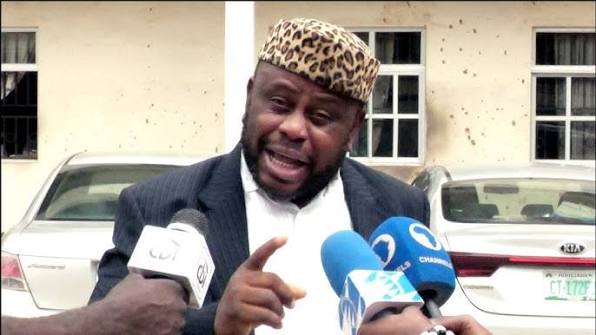
In a fiery appearance on ARISE News’ Prime Time programme, human rights lawyer and convener of Lawyers in Defence of Democracy, Kingdom Okere, launched a blistering attack on the Lagos-Calabar Coastal Highway project, accusing the Minister of Works of treating public funds with reckless abandon.
“The Minister of Works believed he could just wake up and misappropriate public funds,” Okere declared, pointing to what he described as a clear flouting of due process.
He highlighted that the company awarded the contract has Seyi Tinubu, the president’s son, sitting as a board member — a connection that, in his view, raises serious questions about conflict of interest and transparency.
The remarks come against the backdrop of a long-running legal challenge. Okere’s group, the Kingdom Human Rights Foundation International, has dragged President Bola Tinubu, his son Seyi, Works Minister David Umahi, the Attorney-General, and the Chagoury Group’s Hitech Construction Company before the Federal High Court.
The suit seeks full disclosure under the Freedom of Information Act of the procurement process, contract documents, and payments made for the multi-trillion-naira project.
The 700-kilometre (later referenced as up to 750 km) coastal highway — recently renamed the President Bola Ahmed Tinubu Coastal Highway — was awarded to Hitech Construction, owned by the Chagoury family, longstanding allies of the president.
Critics, including former Vice President Atiku Abubakar, have repeatedly condemned the absence of competitive public bidding, the shift from a purported zero-cost public-private partnership model to direct government funding, and the release of over ₦1 trillion for the first phase alone. Estimates for the full project have ranged as high as ₦15.6 trillion.
Government officials have pushed back firmly. Minister Umahi has insisted the project followed due process under the Public Procurement Act (including restrictive bidding options), that it remains a strategic economic corridor linking nine coastal states, and that construction is advancing across multiple sections.
Sections of the road in Lagos have been opened to traffic, with the minister reporting progress beyond Epe into Ogun, Ondo, Akwa Ibom and Cross River.
The government has also secured international financing interest and defended the use of continuously reinforced concrete pavement for durability.
Yet the controversy refuses to die. Demolitions along the Lagos stretch displaced businesses and communities, environmental and alignment concerns persist, and opposition figures continue to label the deal opaque and preferential.
Okere’s latest television outing has once again thrust the project — and the personal links surrounding it — into the national spotlight, keeping the transparency lawsuit and public debate very much alive.
As Nigeria balances the promise of a transformative coastal corridor against demands for accountability, the Lagos-Calabar Highway remains one of the most closely watched and contested infrastructure projects of the Tinubu administration.
 politics
 Adebayo Challenges Tinubu: Where Is Subsidy Money? Come Out and Account for It
 politics
 NDC Wins Logo Battle as Abuja Court Orders INEC to Use Modified Design
 news
news Atiku Exposes Tinubu’s FAAC Scam: Bigger Naira, Poorer Nigerians
 news
news Police Arrest Hafsat Abubakar Over Fake Fintech Shutdown Document Circulated Online
 politics
 Sowore Declares Peter Obi Yelwata Blockade Government-Sponsored Political Attack
How do you feel about this news?
Community Additions
Have a news tip, correction, or extra context about this story? Post it below instantly. All submissions appear live on this screen immediately.