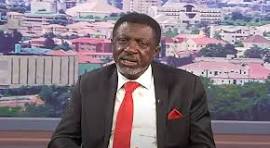
4.43% Growth? Government Spin Can’t Hide Nigeria’s Economic Failure- Paul Ibe
Abuja — Nigeria’s latest economic numbers have ignited a sharp political and technical debate over whether the country is genuinely on course for a $1 trillion economy by 2030.
On Tuesday, the Federal Ministry of Finance released a statement celebrating second-quarter 2026 real GDP growth of 4.43 per cent year-on-year.
The figure marked an improvement from 4.23 per cent in the same period of 2025 and 3.89 per cent in the first quarter of this year. Growth for the first half of 2026 reached 4.16 per cent, up from 3.68 per cent a year earlier.
The ministry, under Coordinating Minister of the Economy Taiwo Oyedele, described the expansion as broad-based.
Twenty-seven economic subsectors grew above 3 per cent. Manufacturing rose 3.24 per cent (more than double the previous year’s rate), agriculture expanded 4.39 per cent, and services — the largest contributor — grew 4.60 per cent. Oil production also improved, averaging 1.72 million barrels per day. Nominal GDP reached ₦119.29 trillion.
Officials highlighted a stronger naira, which appreciated by more than 12 per cent between the first halves of 2025 and 2026. Combined with real growth, this produced an approximate 17 per cent expansion of the economy in dollar terms.
The ministry argued that sustained momentum, alongside social programmes, could lift dollar incomes, improve purchasing power and help position Nigeria among Africa’s largest economies, with a realistic path toward the $1 trillion target by 2030. It also noted the IMF’s ranking of Nigeria among the top 10 contributors to global growth in 2026.
Paul Ibe, media adviser to former Vice President Atiku Abubakar, responded sharply on X. Quoting the ministry’s release, he dismissed the optimism as “tales by moonlight” and a “political pipe dream” typical of the Tinubu administration.
Ibe pointed out that the government itself has previously indicated Nigeria needs sustained annual growth of 10–12 per cent to reach $1 trillion by 2030.
Yet the IMF currently projects only 4.1 per cent growth for 2026 and 4.3 per cent for 2027. “So where will the additional 6–8 percentage points come from?” he asked.
He further argued that the reported 17 per cent rise in dollar GDP largely reflected naira appreciation rather than a corresponding increase in productive capacity or ordinary Nigerians’ incomes.
At a time when many citizens face high living costs, eroding purchasing power and widespread poverty, Ibe said GDP headlines cannot substitute for genuine prosperity.
“A $1 trillion economy is a worthy ambition. But ambition is not a plan, and exchange-rate arithmetic is not economic transformation.”
Independent analyses have long underscored the scale of the challenge. Various estimates suggest that reaching $1 trillion from current dollar GDP levels would require far higher sustained real growth — in some calculations well into double digits annually — or a combination of strong real expansion and significant further currency appreciation. Current trajectories of around 4 per cent fall short of those thresholds.
The exchange exposes a familiar tension in Nigerian economic discourse: impressive-sounding macro statistics versus the lived experience of households still grappling with the aftershocks of earlier reforms, including subsidy removal and currency unification.
While official data show accelerating and more diversified growth, and while the naira has stabilised and strengthened relative to its recent lows, critics insist that the gap between current performance and the growth rates needed for transformative targets remains wide and unexplained.
As the numbers circulate and the political season heats up toward 2027, the conversation is less about whether growth is occurring and more about whether it is fast enough, inclusive enough, and credible enough to deliver the prosperity ordinary Nigerians are waiting to feel.
 politics
 Adebayo Challenges Tinubu: Where Is Subsidy Money? Come Out and Account for It
 politics
 NDC Wins Logo Battle as Abuja Court Orders INEC to Use Modified Design
 news
news Atiku Exposes Tinubu’s FAAC Scam: Bigger Naira, Poorer Nigerians
 news
news Police Arrest Hafsat Abubakar Over Fake Fintech Shutdown Document Circulated Online
 politics
 Sowore Declares Peter Obi Yelwata Blockade Government-Sponsored Political Attack
How do you feel about this news?
Community Additions
Have a news tip, correction, or extra context about this story? Post it below instantly. All submissions appear live on this screen immediately.