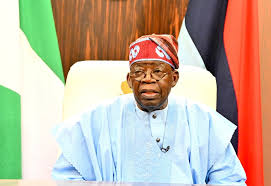
Tinubu Files US Court Challenge to Block Release of Alleged Drug Trafficking Records
Abuja / Washington – August 29, 2026 — President Bola Tinubu has filed a formal challenge in a United States court seeking to prevent the Department of Justice, the Federal Bureau of Investigation and the Drug Enforcement Administration from releasing records connected to long-standing allegations of drug trafficking.
The move comes in a Freedom of Information Act lawsuit brought by American transparency activist Aaron Greenspan, who is pursuing the FBI’s complete file on Tinubu,
Form 302 interview records from 1992–1993, and materials related to a 1993 civil forfeiture case involving approximately $460,000 linked to accounts associated with him.
Tinubu has consistently denied any wrongdoing. His legal team—Christopher W. Carmichael, Victor P. Henderson, and Oluwole O. Afolabi—submitted a 16-page filing arguing that disclosure would constitute an unwarranted invasion of privacy.
They contend that even limited prior public references to the forfeiture do not erase his remaining privacy interest in the fuller investigative files.
Background to the Long-Running Dispute
The records stem from a late-1980s and early-1990s U.S. investigation into a Chicago-based heroin trafficking network.
Court documents from the era describe a civil forfeiture action in which funds in accounts connected to Tinubu and others were seized as alleged proceeds of narcotics trafficking or money-laundering violations.
No criminal conviction against Tinubu resulted from that matter.
Greenspan’s FOIA requests, filed between 2022 and 2023, initially met with “Glomar” responses from some agencies—neither confirming nor denying the existence of records.
In April 2025, U.S. District Judge Beryl Howell of the District of Columbia ruled those blanket responses improper for the FBI and DEA after the agencies had already acknowledged related investigations and ordered them to search for and process non-exempt material.
The case has since seen repeated extensions, in-camera review requests by the FBI (to explain certain withholdings privately to the judge), and interventions by Tinubu as an interested party.
Recent deadlines required the agencies and Tinubu to file oppositions to summary-judgment motions seeking broader release.
Privacy Versus Public Interest
Tinubu’s lawyers maintain that FOIA cannot be used to “mine” government files for information about a private individual simply because his name appears in them.
They cite U.S. Supreme Court precedent holding that individuals retain privacy interests in investigative details even when some related facts have entered the public domain.
The filing asks the court to uphold redactions and withholdings already applied by the FBI and DEA.
Greenspan and supporters of disclosure argue that the public interest in records concerning a sitting foreign head of state outweighs residual privacy claims, particularly given the historical nature of the allegations and prior official acknowledgments of investigative activity.
A Washington-based lobbying firm associated with political opponents of Tinubu has publicly pressed for full release and shared materials with members of the Trump administration and Congress, framing the matter as one of transparency.
Tinubu’s side has portrayed the prolonged litigation as an attempt to rehash decades-old, unproven claims for political ends.
The court continues to weigh the competing motions. Any eventual release would likely involve significant redactions to protect law enforcement methods, confidential sources, and third-party privacy.
The FOIA proceedings do not constitute a criminal trial and do not determine guilt or innocence on the underlying allegations.
As the legal battle unfolds in Washington, the case has reignited debate in Nigeria over transparency, historical accountability and the intersection of personal privacy with high public office.
Tinubu’s team insists the president is simply exercising legitimate legal rights available to any individual under U.S. law.
The outcome will determine how much of the long-sought investigative material, if any, ultimately enters the public domain.
 politics
 Adebayo Challenges Tinubu: Where Is Subsidy Money? Come Out and Account for It
 politics
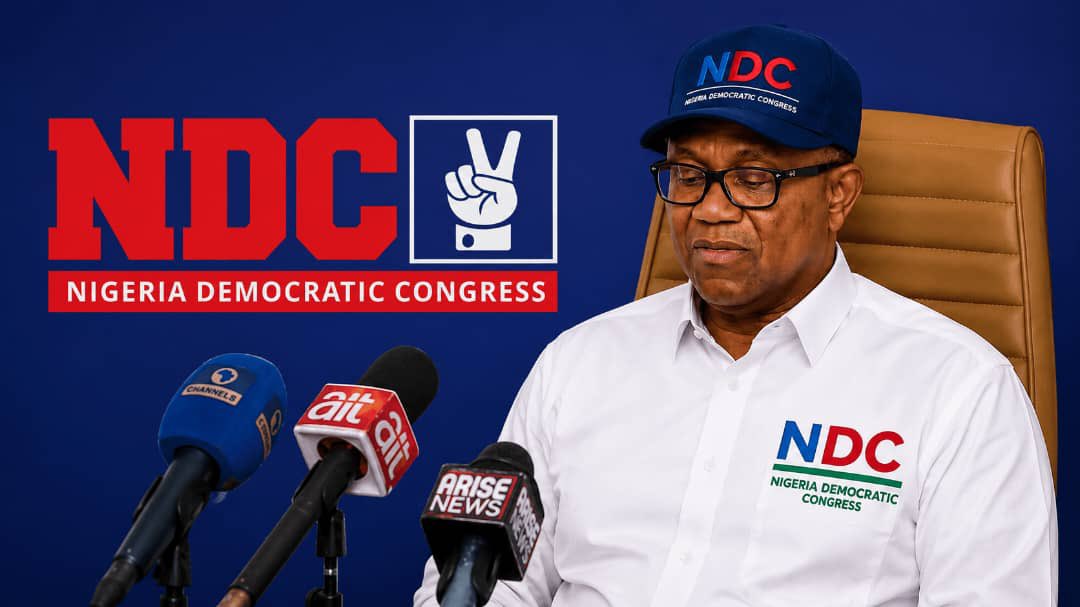
 NDC Wins Logo Battle as Abuja Court Orders INEC to Use Modified Design
 news
news Atiku Exposes Tinubu’s FAAC Scam: Bigger Naira, Poorer Nigerians
 news
news Police Arrest Hafsat Abubakar Over Fake Fintech Shutdown Document Circulated Online
 politics
 Sowore Declares Peter Obi Yelwata Blockade Government-Sponsored Political Attack
How do you feel about this news?
Community Additions
Have a news tip, correction, or extra context about this story? Post it below instantly. All submissions appear live on this screen immediately.