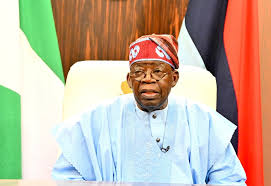
Open Letter to President Bola Ahmed Tinubu
Mr. President @officialABAT,
I write this open letter in the wake of the release of your administration’s “Reforms Scorecard,” presented through the Minister of Finance and Coordinating Minister of the Economy.
You have directed that Nigerians be shown the numbers, the choices made, the progress recorded, and the work that remains. Ordinary Nigerians do not dispute that difficult decisions were taken.
What they reject is the claim that these reforms are meaningfully improving their daily lives.
The sophistication of policy frameworks, fiscal savings, and macroeconomic indicators means little when cooking gas, petrol, food, transport, and electricity remain beyond the reach of the majority and when insecurity continues to make free movement across the country a life-threatening gamble.
Nigerians cannot afford cooking gas. A 12.5 kg cylinder that once sold for around ₦5,000 now costs well above ₦15,000 in many parts of the country; even smaller cylinders routinely exceed ₦8,000.
Premium Motor Spirit (PMS) remains a crushing burden. From roughly ₦195 per litre on the eve of your inauguration, prices surged past ₦600 within weeks, climbed above ₦1,000, peaked near ₦1,200–₦1,214 in late 2024, and have continued to hover at punishing levels—national averages reported in the range of ₦1,000–₦1,500 and higher in some periods and locations.
The statutory minimum wage of ₦70,000 buys only a fraction of a full tank for many workers, leaving little for food, rent, or school fees.
The naira has massively depreciated since you assumed office. It moved from the mid-400s to the dollar in May 2023 to peaks above ₦1,600–₦1,675, with sustained trading in the ₦1,300–₦1,500 range for extended periods.
Headline inflation peaked at 34.8 percent in December 2024—the highest in nearly three decades—while food inflation breached 40 percent.
Even after CPI rebasing and subsequent moderation to the mid-teens, the cumulative price level remains dramatically higher.
World Bank assessments indicate poverty rates rising from around 56 percent in 2023 toward 63 percent, with tens of millions more Nigerians pushed below the poverty line.
The average price of the food items most consumed by the poor has multiplied several-fold. Real incomes have been shredded.
Insecurity continues to ravage the country. Independent trackers and reports document thousands of deaths and abductions annually.
One six-year analysis covering 2020–2025 recorded tens of thousands killed and tens of thousands abducted in terrorism-related and banditry violence.
Nigeria Watch and other monitors reported over 12,000 deaths in 2025 alone from various forms of violence; banditry, farmer-herder clashes, and mass kidnappings remain concentrated in the North-West and North-Central, while residual insurgency persists in the North-East.
People can no longer travel freely from one part of Nigeria to another without fear. Highways remain dangerous; communities live under the constant threat of raids, abductions for ransom, and mass killings. ]
Security budgets have risen substantially, yet the human cost continues to mount.
You promised Nigerians reliable electricity. Instead, the national grid has collapsed repeatedly under your administration—multiple full and partial collapses recorded in 2023, a higher number in 2024, and further incidents into 2025 and 2026.
Generation frequently struggles to exceed 4,000–5,500 MW for a population of over 200 million, with plants going offline due to gas constraints, debts, and infrastructure failures.
While the government has installed solar panels at Aso Villa, millions of ordinary Nigerians remain trapped in perpetual darkness, forced to rely on expensive generators whose fuel costs have also exploded.
Tariff increases have compounded the pain without delivering consistent supply. What exactly are the priorities of this administration when the seat of power is powered while the people are not?
No new federal hospital of significant national impact has been commissioned that has meaningfully altered healthcare access for the majority.
No major new manufacturing revolution has emerged under your watch capable of absorbing the unemployed or substituting imports at scale.
The refineries you promised would be revived remain largely incapable of meeting the expectations you created; even with the Dangote Refinery’s contributions, domestic refining has not delivered the sustained price relief or energy security Nigerians were led to expect.
You removed the fuel subsidy with the justification that the savings would be redirected toward improving the lives of Nigerians.
Billions of dollars in fiscal space were claimed. Yet after all these sacrifices—after the sharp rise in transport costs that fed into every item in the market basket—Nigerians are still experiencing worsening conditions across virtually every sector that touches daily survival.
Palliatives have been slow, limited in reach, and insufficient to offset the scale of hardship. At what point will Nigerians begin to see the promised dividends in lower living costs, safer roads, reliable power, and functioning public services?
What is even more disturbing is the apparent unwillingness of your administration to provide complete and transparent answers on matters that go beyond policy outcomes.
Questions surrounding personal history and educational background have persisted without the clarity, verifiable documentation, and straightforward accountability that a democratic leader owes the citizenry.
Nigerians deserve clarity, transparency, and verifiable information—not evasiveness, contradictions, or endless controversies.
Mr. President, Nigerians are not asking for miracles. We are asking for accountability. We are asking for honesty.
We are asking for competent leadership that measures success by the lived experience of the people rather than by scorecards that celebrate fiscal arithmetic while households collapse under the weight of prices and fear.
Tell Nigerians the truth about the state of the nation. Explain where the sacrifices we have been making are taking us. Tell us what has been achieved in concrete terms that ordinary citizens can feel, what has failed, and what your administration intends to do differently immediately.
You cannot continue asking Nigerians to endure hardship indefinitely while your government keeps telling them that everything is part of a reform process whose benefits remain perpetually “around the corner.”
Enough is enough.
I genuinely wonder what exactly you are campaigning for in 2027 when millions of Nigerians are struggling under the weight of your administration’s policies, with poverty deepened, purchasing power destroyed, insecurity unabated, and basic services still unreliable.
If your government cannot turn things around and restore hope to Nigerians—hope measured in affordable gas, stable fuel prices, a stronger naira in real terms, safe highways, and lights that stay on—then the honorable thing to do would be to resign and spare the country another four years of disappointment.
Otherwise, go before Nigerians in 2027 and let the people decide.
The people are watching. The people are hurting. And ultimately, the people will have their say come January 16th, 2027.
Yours sincerely,
Afolabi Olaiya Idowu
 politics
 Adebayo Challenges Tinubu: Where Is Subsidy Money? Come Out and Account for It
 politics
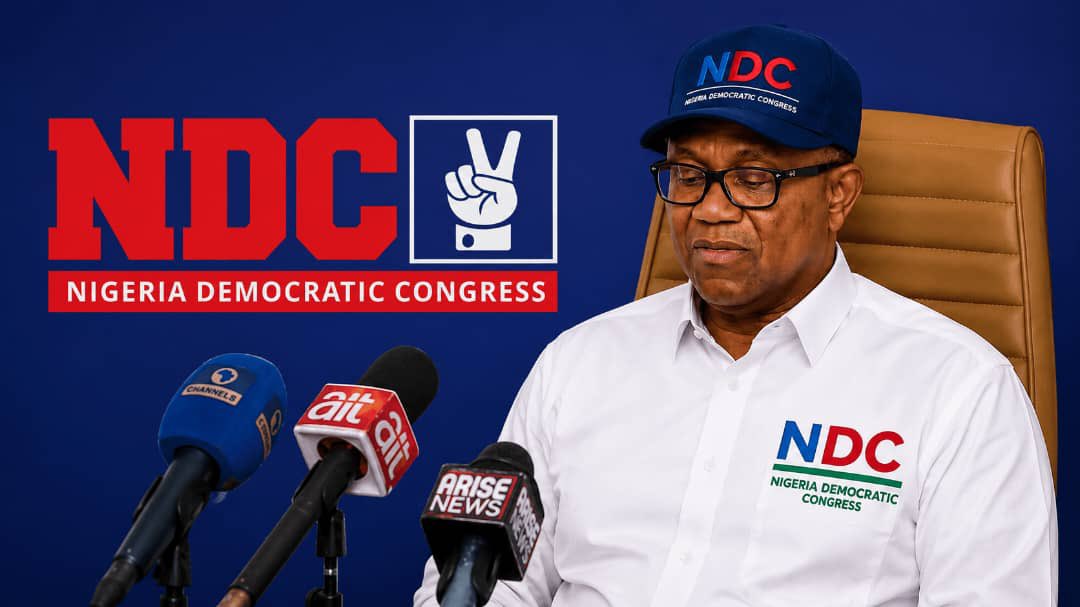
 NDC Wins Logo Battle as Abuja Court Orders INEC to Use Modified Design
 news
news Atiku Exposes Tinubu’s FAAC Scam: Bigger Naira, Poorer Nigerians
 news
news Police Arrest Hafsat Abubakar Over Fake Fintech Shutdown Document Circulated Online
 politics
 Sowore Declares Peter Obi Yelwata Blockade Government-Sponsored Political Attack
How do you feel about this news?
Community Additions
Have a news tip, correction, or extra context about this story? Post it below instantly. All submissions appear live on this screen immediately.