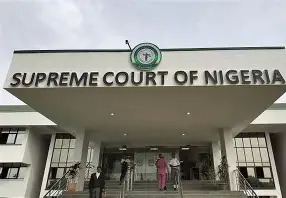
Supreme Court Seals Final Forfeiture of Emefiele’s Assets
ABUJA, Nigeria — In a landmark ruling that reinforces the fight against high-level financial misconduct, the Supreme Court of Nigeria has restored the final forfeiture of seven high-value properties and over two million dollars linked to former Central Bank of Nigeria (CBN) Governor Godwin Emefiele.
A five-member panel of the apex court, led by Justice Ibrahim Saulawa, unanimously allowed the Economic and Financial Crimes Commission’s (EFCC) appeal.
The decision overturns an earlier Court of Appeal verdict that had ordered a retrial, thereby affirming the Federal High Court’s original forfeiture order issued by Justice Deinde Dipeolu on November 1, 2024.
The judgement, read by Justice Mohammed Idris, brings to a close a significant legal chapter in the long-running case.
The forfeited assets — reasonably suspected to be proceeds of unlawful activities — now permanently belong to the Federal Government.
The EFCC’s legal team, led by former Attorney General of the Federation Kanu Agabi (SAN) and including Director of Public Prosecutions Rotimi Oyedepo (SAN), successfully argued the appeal. Emefiele was represented by senior advocates Olalekan Ojo and Labi Lawal.
This ruling comes amid Emefiele’s broader legal challenges, including ongoing trials for alleged multi-billion-dollar fraud, abuse of office, and other financial crimes during his tenure at the CBN.
The former governor has consistently maintained his innocence, but the courts continue to scrutinize the origins of substantial assets acquired during his time in office.
For many Nigerians, this outcome represents more than just the loss of luxury properties — it symbolizes a measure of accountability for one of the most powerful economic figures in recent history.
Emefiele’s tenure coincided with significant economic turbulence, including controversial currency policies and allegations of massive foreign exchange irregularities.
The Supreme Court’s firm stance sends a strong message: no one, regardless of previous status, is above the law when it comes to suspected illicit wealth. It also bolsters the EFCC’s credibility in pursuing asset recovery as a tool for justice.
As the assets revert fully to the government, questions remain about their eventual use—whether they will be sold to recover funds for public good or repurposed for national benefit. Nigerians will be watching closely to ensure transparency in the final disposition.
This victory for the anti-graft agency adds momentum to ongoing efforts to recover public assets and deter future abuse of office.
In a country where economic hardship bites hard, every recovered naira or dollar counts toward rebuilding public trust.
The Supreme Court has spoken clearly. The era of unchecked accumulation of suspicious wealth by public officials appears to be facing stronger judicial headwinds.
 politics
 Adebayo Challenges Tinubu: Where Is Subsidy Money? Come Out and Account for It
 politics
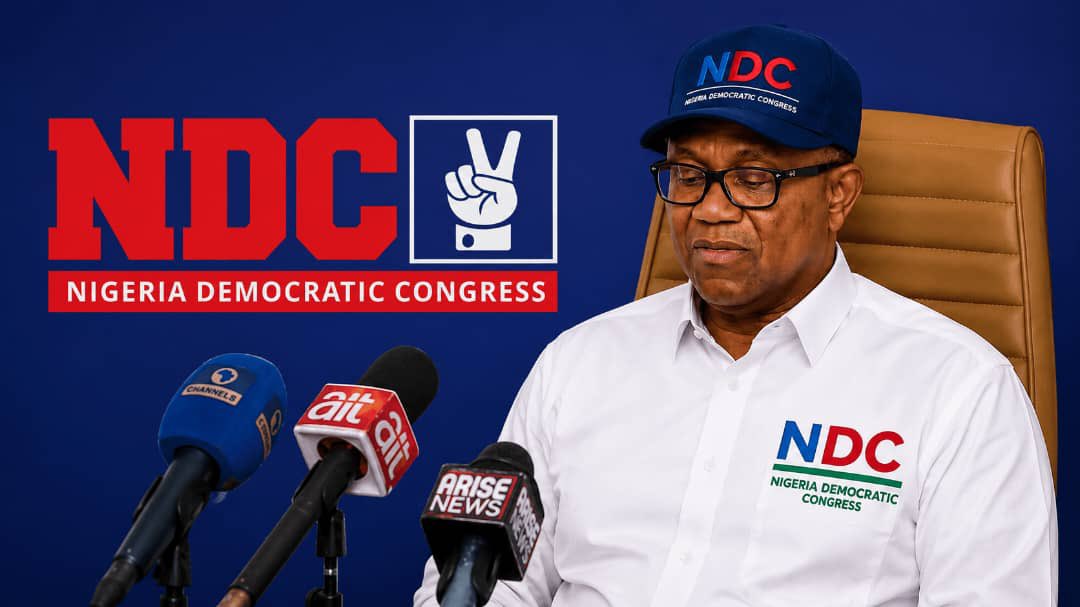
 NDC Wins Logo Battle as Abuja Court Orders INEC to Use Modified Design
 news
news Atiku Exposes Tinubu’s FAAC Scam: Bigger Naira, Poorer Nigerians
 news
news Police Arrest Hafsat Abubakar Over Fake Fintech Shutdown Document Circulated Online
 politics
 Sowore Declares Peter Obi Yelwata Blockade Government-Sponsored Political Attack
How do you feel about this news?
Community Additions
Have a news tip, correction, or extra context about this story? Post it below instantly. All submissions appear live on this screen immediately.