Budget Padding Exposed: Abuja Labour Agency Gets N2.8bn for Solar Lights in Osun
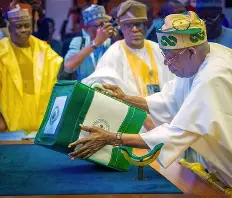
ABUJA, Nigeria —Another troubling case of apparent budget padding has surfaced in Nigeria’s 2026 Appropriation Bill, raising fresh questions about fiscal discipline, transparency, and the proper use of public funds under the Tinubu administration.
According to details uncovered in the budget documents, the Industrial Arbitration Panel (IAP)—a federal agency primarily tasked with resolving workplace and labour disputes between employers and employees—has been allocated a staggering ₦2.8 billion for the “Supply & Installation of Solar Streetlights” in Ife East, Osun State.
This allocation has sparked widespread criticism from budget analysts and civic groups, who argue it falls completely outside the agency’s statutory responsibilities.
For comparison, similar solar streetlight projects in neighbouring Ile-Ife North and South constituencies are budgeted at just ₦105 million each — making the IAP’s allocation roughly 27 times higher and prompting serious concerns about inflated costing and potential misuse of funds.
The IAP is not alone. Further examination of its budget reveals additional off-mandate projects, including ₦70 million for fertilizer supply in Kogi State, ₦205.37 million for science laboratories in Kwara State, and ₦105 million for a mini-stadium in Cross River State.
Critics contend that such infrastructure and agricultural initiatives should be handled by relevant ministries like Power, Agriculture, or Works, rather than a labour dispute resolution body.
This latest revelation fits into a larger pattern of concerns about “mandate hijacking” in the 2026 budget, where multiple agencies receive billions for projects unrelated to their core functions.
Civic organizations have highlighted how such practices weaken oversight, complicate accountability, and erode public trust in governance.
In a country where millions still lack access to reliable electricity and basic infrastructure, questions abound: Why route solar projects through a labour arbitration panel?
Are these allocations genuine attempts at service delivery or vehicles for constituency patronage and potential leakages?
As Nigerians continue to grapple with economic hardships, high inflation, and questions over value for money in public spending, incidents like this fuel cynicism about how national budgets are prepared and executed.
The 2026 budget, already under intense scrutiny for various insertions and anomalies, risks further damaging confidence in government fiscal management.
Stakeholders, including the National Assembly, anti-corruption agencies, and civil society, have a duty to scrutinize these allocations thoroughly.
Nigerians deserve budgets that prioritize real needs, transparent execution, and measurable impact — not creative accounting that blurs lines and invites suspicion.
The conversation around fiscal responsibility must move beyond headlines to concrete reforms that ensure every naira serves its intended purpose.
For now, the ₦2.8 billion solar streetlight allocation in Osun via an Abuja labour agency stands as a stark example of why vigilance over public spending remains more critical than ever.
 politics
 Adebayo Challenges Tinubu: Where Is Subsidy Money? Come Out and Account for It
 politics
 NDC Wins Logo Battle as Abuja Court Orders INEC to Use Modified Design
 news
news Atiku Exposes Tinubu’s FAAC Scam: Bigger Naira, Poorer Nigerians
 news
news Police Arrest Hafsat Abubakar Over Fake Fintech Shutdown Document Circulated Online
 politics
 Sowore Declares Peter Obi Yelwata Blockade Government-Sponsored Political Attack
How do you feel about this news?
Community Additions
Have a news tip, correction, or extra context about this story? Post it below instantly. All submissions appear live on this screen immediately.