
Reps Scrap Own State Police Bill, Back Tinubu’s Version"
ABUJA, Nigeria — In a surprising parliamentary twist that has ignited fresh debate on federalism and security reform, the House of Representatives has set aside its own State Police Bill — passed just 33 days earlier — to prioritize and consider President Bola Tinubu’s executive version instead.
Broadcast journalist Nifemi Oguntoye highlighted the development in a detailed video analysis, questioning why lawmakers would so quickly abandon legislation they had already approved.
The move, which occurred during Tuesday’s plenary, clears the path for Tinubu’s Constitution of the Federal Republic of Nigeria (Alteration) (State Police) Bill, 2026.
President Tinubu transmitted the bill to the National Assembly on June 15, 2026, describing it as building on prior legislative efforts while incorporating additional safeguards for a dual policing system (federal and state).
The proposal aims to address Nigeria’s persistent security challenges — banditry, kidnapping, insurgency, and farmer-herder clashes — by empowering states to establish and fund their own police forces.
According to analyses, the executive bill includes provisions designed to prevent abuse of power by state governors.
These reportedly include federal oversight mechanisms, prohibitions on using state police for partisan, ethnic, religious, or personal purposes, and intervention powers in cases of misconduct.
The framework seeks to create a coordinated national security architecture while respecting state autonomy. The House has now advanced Tinubu’s bill through first and second readings, referring it to the Constitution Review Committee for further scrutiny.
For the amendment to succeed, it requires two-thirds approval in both chambers of the National Assembly and endorsement by at least 24 state Houses of Assembly — a high bar that reflects the gravity of restructuring policing in Africa’s most populous nation.
Lawmakers cited “new facts” and the need for harmony with the executive proposal. Supporters view this as pragmatic collaboration to fast-track much-needed security reforms.
Critics, however, question the speed and optics: Does this reflect healthy executive-legislative synergy or undue influence that undermines the independence of the legislature?
The development comes amid long-standing calls for state police, especially from governors who argue that the centralized Nigeria Police Force is overstretched and ill-equipped for local threats.
Opponents have historically feared it could lead to abuse, political victimization, or the creation of “governor’s armies.”
If passed, state police could mark one of the most significant constitutional changes in Nigeria’s Fourth Republic — potentially improving response times to local crimes while raising complex questions about funding, training standards, command structure, and human rights protections.
For ordinary Nigerians living under the daily shadow of insecurity, the stakes are profoundly human: safer communities, quicker justice, and restored confidence in governance.
Yet success will depend on robust safeguards, transparent implementation, and genuine political will beyond partisan lines. This decision could shape the future of policing for generations.
The coming weeks of committee work and public discourse will determine whether Nigeria moves toward a more effective, decentralized security model or risks repeating old patterns of centralized failure.
The conversation is only beginning — and every Nigerian has a stake in its outcome.
 politics
 Adebayo Challenges Tinubu: Where Is Subsidy Money? Come Out and Account for It
 politics
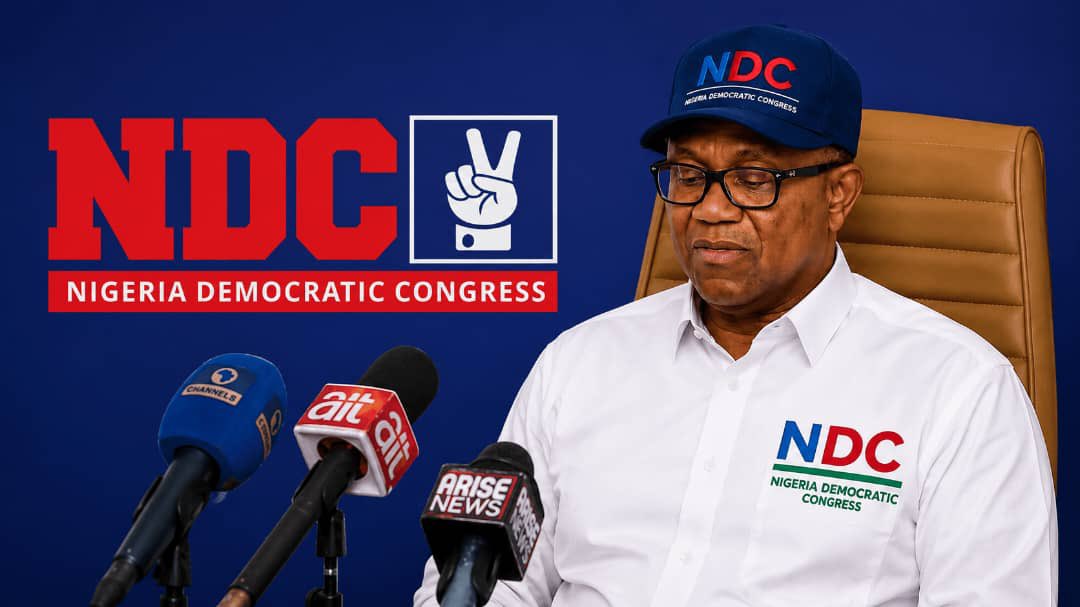
 NDC Wins Logo Battle as Abuja Court Orders INEC to Use Modified Design
 news
news Atiku Exposes Tinubu’s FAAC Scam: Bigger Naira, Poorer Nigerians
 news
news Police Arrest Hafsat Abubakar Over Fake Fintech Shutdown Document Circulated Online
 politics
 Sowore Declares Peter Obi Yelwata Blockade Government-Sponsored Political Attack
How do you feel about this news?
Community Additions
Have a news tip, correction, or extra context about this story? Post it below instantly. All submissions appear live on this screen immediately.