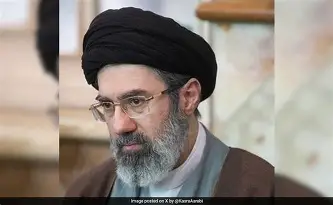
Iran's New Supreme Leader Barred from Father's Funeral Amid Security Fears
TEHRAN — In a striking sign of the perilous security landscape gripping post-war Iran, the country’s new Supreme Leader, Mojtaba Khamenei, has reportedly been prevented from publicly attending his father’s funeral amid fears he could be assassinated or his location compromised.
The revelation, first reported by U.S. media citing sources within Iran’s Islamic Revolutionary Guard Corps (IRGC), underscores the deep tensions and ongoing threats facing Iran’s leadership following the assassination of longtime Supreme Leader Ayatollah Ali Khamenei in February 2026 during the opening strikes of the U.S.-Israeli war on Iran.
Huge crowds have gathered in Tehran and other cities for a six-day state funeral that began this weekend, nearly four months after Khamenei’s death.
The elaborate ceremonies, involving processions across Iran and neighboring Iraq, are expected to draw millions and serve as both a massive display of national mourning and a show of regime resilience.
According to the reports, Mojtaba Khamenei — who succeeded his father as Supreme Leader — had requested permission to attend the July 9 burial in the holy city of Mashhad and perform traditional funeral rites.
However, senior security officials, wary of Israeli or other external targeting, rejected the plea.
Mojtaba himself was reportedly injured in the strike that killed his father, and his wife was among those killed. His absence from public view has already fueled speculation and internal conservative debates about leadership stability.
The decision highlights the extraordinary measures Iran’s theocracy is taking to protect its top figures. Israeli Defense Minister Israel Katz had recently reiterated threats against Khamenei, adding to the sense of vulnerability.
A Nation Mourns, a Regime Projects Strength
Despite the behind-the-scenes drama, Iranian authorities have mobilized on a massive scale. The funeral, originally planned for March but delayed by the ongoing conflict, includes processions in Tehran, Qom, and Mashhad, with the body also taken to holy Shiite sites in Najaf and Karbala, Iraq.
State media report millions expected on the streets, with foreign delegations from over 100 countries attending. The events are framed as a defiant national farewell, reminiscent of the 1989 funeral for Ayatollah Ruhollah Khomeini, the Islamic Republic’s founder.
For many ordinary Iranians, the ceremonies offer a moment of collective grief and solidarity after months of devastating war. Banners across Tehran urge unity and resistance, while authorities have deployed tens of thousands of security forces.
Geopolitical Echoes and Uncertain Future
The funeral comes at a sensitive time for Iran. The regime is navigating reconstruction, internal power dynamics, and international isolation following the conflict.
Mojtaba Khamenei’s low public profile has raised questions about succession stability and the balance of power within the clerical and military establishment.
Critics and observers note the irony and tragedy: a leader once seen as untouchable now has his son unable to safely mourn him in public.
For the Islamic Republic, the spectacle aims to project continuity and strength — but the reported security concerns reveal underlying fragility.
As processions continue through the week and the body makes its final journey to Mashhad, Iran remains a nation in mourning, its leadership navigating both profound loss and persistent threats in a volatile region.
The coming days will test not only the regime’s organizational prowess but its ability to inspire loyalty amid uncertainty.
The story of Iran’s revolution and resistance, it seems, continues to unfold in the shadow of violence and vigilance.
 politics
 Adebayo Challenges Tinubu: Where Is Subsidy Money? Come Out and Account for It
 politics
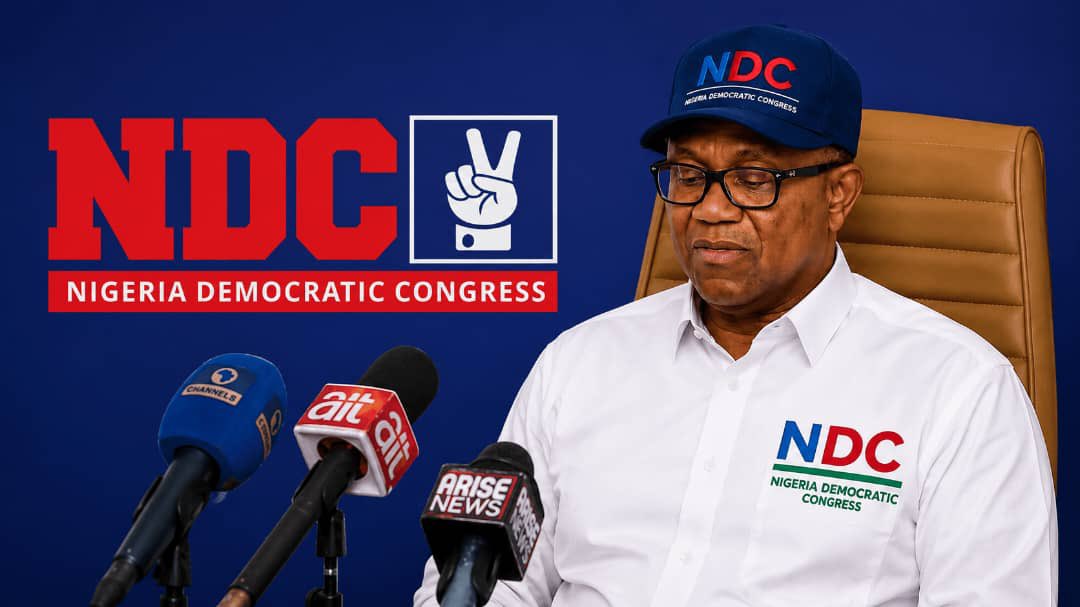
 NDC Wins Logo Battle as Abuja Court Orders INEC to Use Modified Design
 news
news Atiku Exposes Tinubu’s FAAC Scam: Bigger Naira, Poorer Nigerians
 news
news Police Arrest Hafsat Abubakar Over Fake Fintech Shutdown Document Circulated Online
 politics
 Sowore Declares Peter Obi Yelwata Blockade Government-Sponsored Political Attack
How do you feel about this news?
Community Additions
Have a news tip, correction, or extra context about this story? Post it below instantly. All submissions appear live on this screen immediately.