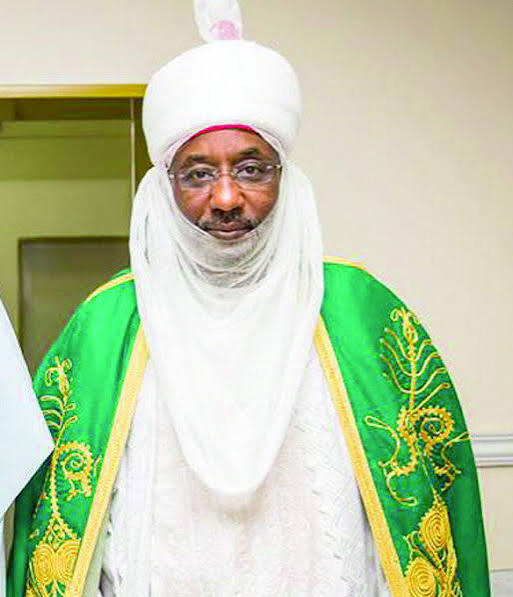
Sanusi Slams Tinubu Era: “Yar’Adua, Jonathan Never Overbearing”
Abuja, Nigeria - In a candid public reflection that has ignited fierce debate, the Emir of Kano, Muhammadu Sanusi Lamido Sanusi, has drawn a sharp contrast between his experiences as Central Bank of Nigeria (CBN) Governor under former Presidents Umaru Yar’Adua and Goodluck Jonathan and the current administration of President Bola Tinubu.
Speaking at a recent event, the influential traditional ruler and former banker praised the two late and former leaders for their non-interference in monetary policy.
“I worked under former Presidents Yar’Adua and Goodluck Jonathan, and to be honest, during my years as Central Bank Governor, neither of them was overbearing politically,” Sanusi stated, gesturing emphatically as he addressed his audience.
Sanusi, who served as CBN Governor from 2009 to 2014, recalled a period of relative institutional autonomy. Under Yar’Adua and Jonathan, he suggested, the executive respected the independence of the apex bank, allowing professional judgment on critical economic matters without undue political pressure.
This praise for past leadership comes amid Sanusi’s growing public critiques of contemporary governance and economic management.
The remarks, captured in a widely shared video, have been interpreted by many as an implicit rebuke of the Tinubu administration, which Sanusi appears to suggest exerts more political influence over key institutions.
While he stopped short of naming the current president directly in the clip, the timing and context have fueled speculation and strong reactions across Nigeria’s polarized political landscape.
The statement has reopened old wounds and triggered a wave of criticism directed at Sanusi himself. Many Nigerians, particularly supporters of former President Jonathan, reminded the public of Sanusi’s controversial role during the Jonathan era.
As CBN Governor, he raised alarms about alleged missing billions in oil revenue — claims that became potent ammunition for the opposition and contributed to the narrative that helped propel the All Progressives Congress (APC) to power in 2015.
Sanusi’s intervention arrives at a sensitive moment. The Tinubu administration faces mounting criticism over economic hardship, inflation, fuel prices, and governance style.
The Emir, a vocal figure with a history of challenging authority (including his own dethronement and reinstatement as Emir), continues to wield significant influence in northern Nigeria and beyond.
His comments highlight perennial tensions in Nigeria’s democracy: the balance between executive authority and institutional independence, the role of technocrats versus politicians, and the long shadow of past decisions on current perceptions.
They also underscore how quickly alliances shift in Nigerian politics — yesterday’s critic can become today’s reluctant admirer of past leaders.
As reactions continue to pour in, Sanusi’s remarks serve as both a historical reflection and a subtle warning.
For a nation still grappling with economic reforms, security challenges, and questions of leadership style, they add fuel to ongoing debates about what effective, non-overbearing governance truly looks like.
Whether this signals deeper elite discontent or remains an isolated observation, one thing is clear: in Nigeria’s vibrant public square, even a former CBN Governor turned Emir cannot speak without consequence — or without reminding citizens of the country’s complex political memory.
 politics
 Adebayo Challenges Tinubu: Where Is Subsidy Money? Come Out and Account for It
 politics
 NDC Wins Logo Battle as Abuja Court Orders INEC to Use Modified Design
 news
news Atiku Exposes Tinubu’s FAAC Scam: Bigger Naira, Poorer Nigerians
 news
news Police Arrest Hafsat Abubakar Over Fake Fintech Shutdown Document Circulated Online
 politics
 Sowore Declares Peter Obi Yelwata Blockade Government-Sponsored Political Attack
How do you feel about this news?
Community Additions
Have a news tip, correction, or extra context about this story? Post it below instantly. All submissions appear live on this screen immediately.