Modi Hosts BRICS Security Chiefs Amid Global Turmoil
New Delhi, June 23, 2026—In a significant display of diplomatic engagement at a time of heightened global instability, Prime Minister Narendra Modi met with National Security Advisers and senior security officials from BRICS nations on Tuesday, underscoring India’s pivotal role in fostering multilateral security cooperation.
The high-profile gathering, part of the two-day BRICS National Security Advisers’ Meeting (June 22-23) chaired by India’s National Security Advisor Ajit Doval, brought together representatives from the bloc’s 11 member countries, including established powers like China, Russia, and Brazil, as well as newer members such as Egypt, Iran, Ethiopia, Indonesia, and the UAE.
In his accompanying statement on X (formerly Twitter), Modi expressed pleasure at the meeting and highlighted the evolving global landscape.
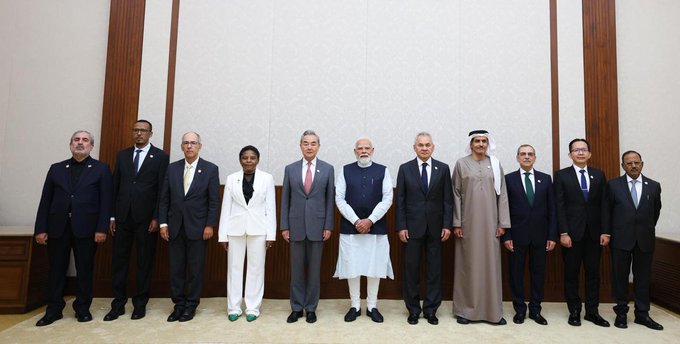
“In a changing global landscape, BRICS has a vital role in deepening security cooperation and addressing shared challenges, from terrorism and cyber security to emerging technologies,” he posted, alongside a group photograph showing him prominently positioned at the center.
India assumed the BRICS Chairship in January 2026 for the fourth time (previously in 2012, 2016, and 2021), under the theme *“Building for Resilience, Innovation, Cooperation and Sustainability.” This reflects a people-centric, humanity-first approach articulated by Modi at the 2025 Rio Summit.
During the NSA-level discussions, participants focused on non-traditional security challenges, including the rapidly evolving threats posed by new technologies, transnational terrorism, and cybersecurity risks.
The meeting sets the stage for the 18th BRICS Leaders’ Summit, scheduled for September 2026 in India.
Modi emphasized that India’s Chairmanship would advance *practical cooperation*, prioritize the needs of the Global South, and contribute to a “safer, more secure, and inclusive world.”
This aligns with BRICS’ broader positioning as a counterbalance in a multipolar world, amplifying voices often sidelined in traditional Western-led forums.
The timing is notable. Geopolitical tensions—from conflicts in Ukraine and the Middle East to concerns over cyber vulnerabilities and emerging tech like AI in warfare—have intensified calls for alternative platforms for dialogue.
BRICS, originally Brazil-Russia-India-China-South Africa, has expanded significantly, now representing a substantial portion of the world’s population and economic output.
Analysts view the meeting as an opportunity for concrete outcomes: enhanced intelligence sharing on terrorism, joint frameworks for cyber defense, and collaborative norms on responsible use of emerging technologies.
For India, it reinforces its image as a bridge-builder—maintaining strategic partnerships with the West while deepening ties within the Global South.
The visual from the meeting—a formal group portrait in a New Delhi venue—captures the diversity of the participants, from Western-style suits to traditional attire, symbolizing the bloc’s cross-cultural reach.
As veteran observers note, such gatherings rarely yield immediate breakthroughs but build the quiet architecture of trust and coordination essential in an unpredictable era.
For Modi, who has long championed proactive global leadership, this event reinforces India’s credentials on the world stage during its BRICS presidency.
Critics may point to persistent intra-BRICS differences (e.g., India-China border issues or varying stances on conflicts), yet the shared commitment to addressing common threats like terrorism offers a pragmatic foundation for progress.
India’s hosting of this security conclave signals not just logistical success but strategic intent: positioning BRICS as a relevant actor in global security governance, even as the world grapples with fragmentation.
As preparations ramp up for the September summit, expectations remain high for deliverables that translate dialogue into tangible resilience for member nations and the Global South at large.
This meeting, modest in public fanfare yet substantive in scope, exemplifies the steady, behind-the-scenes diplomacy that often shapes the headlines of tomorrow.
 politics
 Adebayo Challenges Tinubu: Where Is Subsidy Money? Come Out and Account for It
 politics
 NDC Wins Logo Battle as Abuja Court Orders INEC to Use Modified Design
 news
news Atiku Exposes Tinubu’s FAAC Scam: Bigger Naira, Poorer Nigerians
 news
news Police Arrest Hafsat Abubakar Over Fake Fintech Shutdown Document Circulated Online
 politics
 Sowore Declares Peter Obi Yelwata Blockade Government-Sponsored Political Attack
How do you feel about this news?
Community Additions
Have a news tip, correction, or extra context about this story? Post it below instantly. All submissions appear live on this screen immediately.