"Your Labour Is Not Charity": Bejide Vows to End Ekiti’s ₦40 Billion Pension Scandal
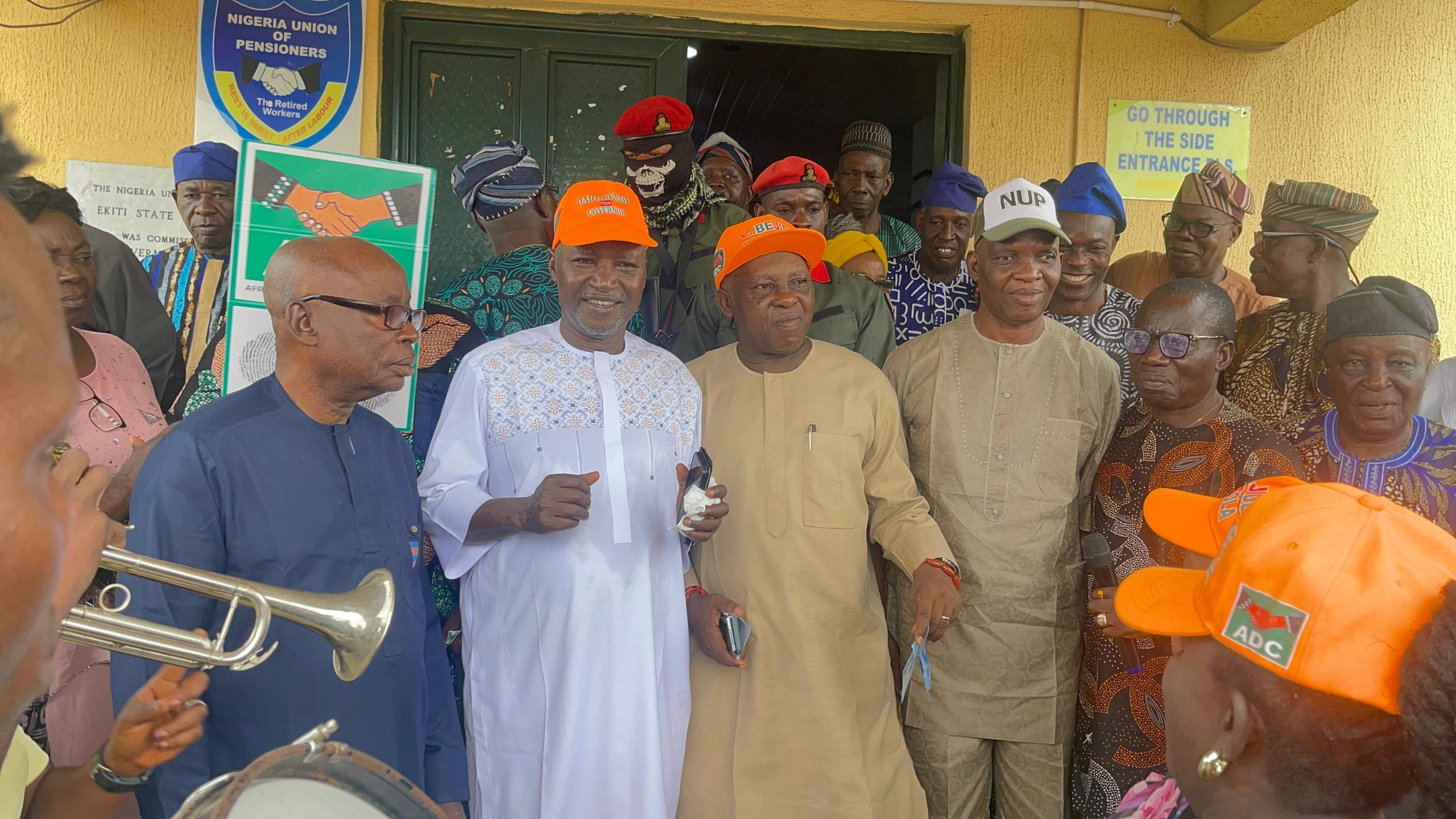
Ado Ekiti, Ekiti State June 15, 2026 - In a political culture where retirees are often reduced to supplicants, begging for the fruit of their decades-long labour, the African Democratic Congress (ADC) Governorship Candidate in Ekiti State, Ambassador Oluwadare Bejide, is drawing a definitive moral line in the sand.
Breaking away from the bureaucratic silence that has defined the plight of over 22,000 senior citizens, Bejide engaged the leadership of the Nigeria Union of Pensioners (NUP) with a message that was as blunt as it was compassionate: a gratuity is a constitutional right, not a political favour.
His stark warning that no pensioner should “die waiting for money that rightfully belongs to them” signals a radical departure from a governance tradition that has normalized the suffering of the elderly.
The meeting, held at the NUP State Secretariat, was not merely a campaign stop; it was an indictment of a systemic failure.
The State Chairman of the NUP, Comrade Temitope Popoola, set the grim stage by revealing a staggering outstanding gratuity liability exceeding ₦40 billion.
This is not just a fiscal deficit; it is a humanitarian crisis denominated in naira. Behind that figure lie thousands of personal tragedies—retired teachers who cannot afford medication, former civil servants plunged into depression, and families fractured by financial distress.
The chairman’s plea was visceral: “Remember our people if God gives you the mantle of ruling Ekiti, because if a single pensioner is happy I am happy, and so if they’re sad,” he stated, laying a moral burden on the aspirant’s shoulders.
Ambassador Bejide, armed with the diplomatic finesse of a former envoy and the administrative memory of a former Secretary to the State Government (SSG), refused to offer the usual vague platitudes. He moved beyond sympathy to strategy.
Reminding the audience of his tenure under Governor Segun Oni, he recalled how his team achieved what current administrations have failed to do:
“During my service as SSG, we settled the backlog of gratuities owed to Ekiti pensioners, including liabilities dating back to the old Ondo State period. We accomplished this despite receiving less than ₦3 billion monthly allocation at the time.”
This historical precedent serves as his strongest argument—proving that the current ₦40 billion scandal is not a matter of insufficient resources, but a catastrophic failure of political will and prioritization.
While the present administration points to a paltry ₦10,000 increment as a palliative in a time of hyperinflation, Bejide is proposing a structural overhaul.
His vision, inspired by his tenure as Nigeria’s Ambassador to Canada, seeks to transplant a dignity-based welfare framework to Ekiti.
He referenced the mechanics of the Canada Pension Plan (CPP) and Old Age Security (OAS), systems designed to guarantee financial security regardless of economic fluctuations.
“In Canada, government deliberately plans for the welfare of its elderly population… My exposure abroad has convinced me that Ekiti can do much better,” Bejide asserted.
This is a direct challenge to the transactional nature of Nigerian governance, proposing instead a system where, in Bejide’s words, “pensioners are honoured, paid promptly, and never forced to wait ten or fifteen years.”
The candidate’s immediate action plan hinges on a surgical injection of liquidity and transparent scheduling.
With a concrete promise to prioritize a “good chunk” of the gratuity backlog between October and December of his inaugural year, Bejide is committing to a “first-in, first-out” principle to eradicate the favoritism that often plagues payment systems.
The signing of a Memorandum of Understanding (MoU) with the union elevates these promises from campaign rhetoric to a draft social contract, binding a prospective administration to specific timelines.
In a state where the elderly built the educational and moral infrastructure, Bejide’s closing tribute—“They educated us, mentored us, and devoted their productive years to public service”—serves as a solemn reminder that governance must ultimately be measured by how it treats those who can no longer fend for themselves.
 politics
 Adebayo Challenges Tinubu: Where Is Subsidy Money? Come Out and Account for It
 politics
 NDC Wins Logo Battle as Abuja Court Orders INEC to Use Modified Design
 news
news Atiku Exposes Tinubu’s FAAC Scam: Bigger Naira, Poorer Nigerians
 news
news Police Arrest Hafsat Abubakar Over Fake Fintech Shutdown Document Circulated Online
 politics
 Sowore Declares Peter Obi Yelwata Blockade Government-Sponsored Political Attack
How do you feel about this news?
Community Additions
Have a news tip, correction, or extra context about this story? Post it below instantly. All submissions appear live on this screen immediately.