
Emeka Ike Sues INEC, Wike Aide for N10bn Data Breach
Abuja, Nigeria – June 16, 2026 - Veteran Nollywood actor and aspiring politician Emeka Ike has filed a landmark ₦10 billion lawsuit against the Independent National Electoral Commission (INEC) and Lere Olayinka, Senior Special Assistant on Public Communications to Federal Capital Territory (FCT) Minister Nyesom Wike, alleging unauthorised access and public disclosure of his personal voter registration data.
The suit, marked FHC/ABJ/CS/1272/2026, was lodged at the Federal High Court in Abuja on Monday, June 15, marking one of the most high-profile data privacy confrontations in Nigeria’s electoral history.
The legal action stems from events on May 30, 2026, when Olayinka posted on X (formerly Twitter) questioning Ike’s eligibility to contest the House of Representatives seat for the Abuja Municipal Area Council (AMAC)/Bwari Federal Constituency.
Attached were screenshots purportedly extracted from INEC’s restricted Continuous Voter Registration (CVR) backend portal, revealing Ike’s application number, registration centre, voter identification number, and profile photograph.
Ike had recently transferred his voter registration from Imo State to the FCT ahead of his political debut, a move Olayinka framed as disqualifying.
The post ignited immediate outrage, with Nigerians questioning how a political aide accessed a database holding sensitive details of over 90 million registered voters—information legally classified as private and confidential under the Nigeria Data Protection Act and the 1999 Constitution.
In court papers, Ike’s legal team argues that the disclosure constituted a flagrant violation of his fundamental right to privacy, exposed him to potential identity theft, harassment, and political victimisation, and undermined public confidence in INEC’s ability to safeguard electoral data.
The suit seeks joint and several liability from both INEC and Olayinka, demanding ₦10 billion in general and exemplary damages, an immediate public apology, deletion of the offending post, and a court order restraining further dissemination.
Lawyers have also written to INEC, the Department of State Services (DSS), the Inspector-General of Police, and Ike’s political party to place the matter on official record.
INEC has confirmed it launched an internal investigation shortly after the controversy erupted. Preliminary findings indicate that an internal staffer misused official credentials to extract and share the data, prompting parallel probes by security agencies.
Neither INEC nor the FCT Minister’s office has issued a formal statement on the lawsuit as of Tuesday morning, though the commission had earlier assured the public it takes data breaches seriously. This silence has fuelled speculation about accountability gaps within Nigeria’s electoral bureaucracy.
Public reaction has been sharply divided yet predominantly critical. On social media, many Nigerians expressed support for Ike’s decision to seek redress, viewing it as a necessary stand against the weaponisation of state-held personal data for political score-settling.
Others voiced cynicism about the Nigerian judiciary’s capacity or willingness to deliver meaningful justice against powerful political actors, noting that even favourable judgments often face enforcement hurdles when government agencies are involved.
The episode has also spotlighted broader vulnerabilities: with the 2027 general elections approaching, any perception that INEC’s systems can be exploited by political operatives risks eroding already fragile trust in the electoral process.
From a data protection perspective, the case tests the practical enforcement of the Nigeria Data Protection Act 2023.
While the law establishes clear principles of consent, purpose limitation, and security, critics argue that enforcement remains weak, particularly when breaches involve politically connected individuals or institutions.
Ike’s transfer of voter registration to the FCT—perfectly legal under INEC guidelines—illustrates how routine administrative actions can be politicised when personal data leaks into the public domain.
The incident raises uncomfortable questions about the boundaries between legitimate political scrutiny and invasive doxxing, and whether aides to high-ranking officials operate with implicit impunity when accessing sensitive government portals.
Legal experts note that proving actual damages from a privacy breach can be challenging, yet the symbolic value of the suit is significant.
It signals growing willingness among public figures to challenge state and political actors in court rather than relying solely on social media outrage.
For ordinary Nigerians, whose biometric and personal details sit in the same INEC database, the case serves as a stark reminder that data security lapses could expose millions to similar risks.
Should the court award substantial damages or issue strong injunctive relief, it could catalyse long-overdue reforms in INEC’s cybersecurity protocols, staff access controls, and oversight mechanisms.
Conversely, if the case drags on or yields only nominal remedies, it may reinforce perceptions of a two-tier justice system—one for the politically connected and another for everyone else.
Either outcome will reverberate far beyond Emeka Ike’s personal grievance. In an era where voter data is both a national asset and a potential liability, this lawsuit forces Nigeria to confront whether its institutions can protect the privacy of citizens while maintaining the integrity of its democracy.
The eyes of legal practitioners, civil society, and the international community will remain fixed on Abuja as proceedings unfold.
 politics
 Adebayo Challenges Tinubu: Where Is Subsidy Money? Come Out and Account for It
 politics
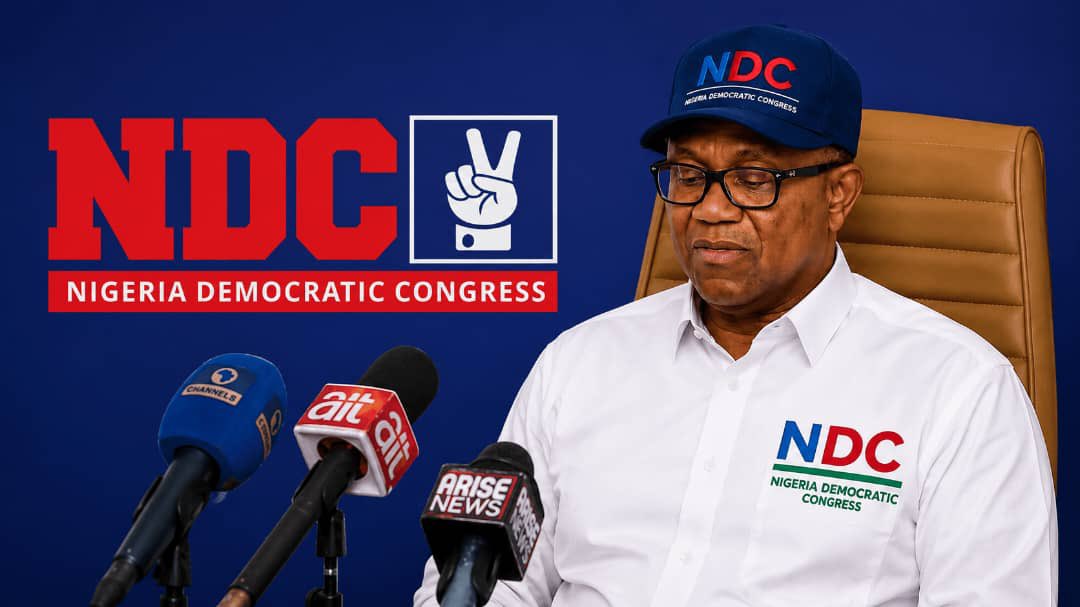
 NDC Wins Logo Battle as Abuja Court Orders INEC to Use Modified Design
 news
news Atiku Exposes Tinubu’s FAAC Scam: Bigger Naira, Poorer Nigerians
 news
news Police Arrest Hafsat Abubakar Over Fake Fintech Shutdown Document Circulated Online
 politics
 Sowore Declares Peter Obi Yelwata Blockade Government-Sponsored Political Attack
How do you feel about this news?
Community Additions
Have a news tip, correction, or extra context about this story? Post it below instantly. All submissions appear live on this screen immediately.