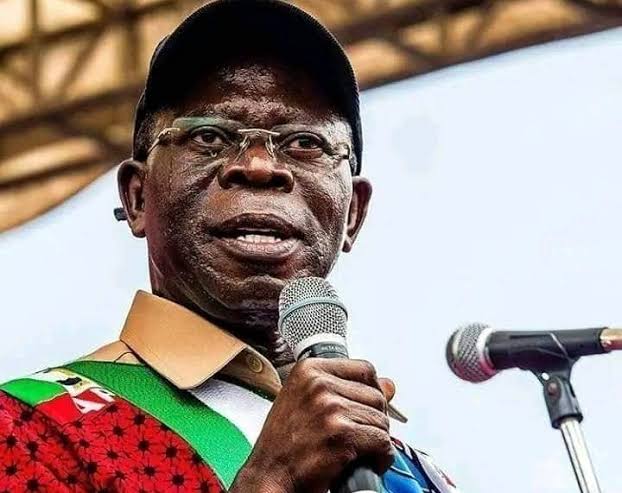
Oshiomhole Claims Akpabio Allegedly Shielded NNPCL Probe Over Daughter’s Position
Abuja, Nigeria — June 15, 2026 - In a dramatic escalation of long-simmering tensions inside Nigeria’s upper legislative chamber, Senator Adams Oshiomhole has directly accused Senate President Godswill Akpabio of using his position to shield the Nigerian National Petroleum Company Limited (NNPCL) from rigorous scrutiny over more than ₦210 trillion in audit discrepancies spanning 2017 to 2023.
The Edo North lawmaker claims Akpabio’s motivation stems from a personal conflict of interest: the alleged employment of his daughter in a senior, unmerited “juicy position” at the national oil company during Mele Kyari’s tenure as Group Chief Executive Officer.
Oshiomhole made the explosive allegation while defending his earlier conduct during a heated Public Accounts Committee hearing and subsequent Senate plenary.
He argued that the Senate’s swift decision to void an arrest warrant issued against Kyari for repeatedly ignoring nine committee invitations, and its public rebuke of his own strong language describing NNPCL officials as operating like “a bunch of criminals and thieves,” revealed institutional protection rather than procedural fairness.
According to Oshiomhole, Akpabio possesses a “personal interest in NNPC” because former NNPCL boss Mele Kyari placed his daughter in a lucrative role she “probably didn’t merit.”
The senator framed this as part of a wider pattern of nepotism that has turned the strategic national oil company into what he described as a family-dominated enterprise.
He insisted his criticism was not personal grandstanding but a defense of legislative integrity and the Nigerian people’s right to accountability over the federation’s most critical revenue source.
The ₦210 trillion figure arises from audit queries covering crude oil marketing, product distribution losses, unaccounted funds allegedly held in now-liquidated banks, and other discrepancies during Kyari’s leadership.
Oshiomhole highlighted specific concerns, including claims that substantial volumes of petroleum products could not be properly traced through tanker and driver networks.
These issues echo long-standing criticisms of opacity in Nigeria’s oil sector, where under-remittance to the federation account, fuel subsidy irregularities, and weak internal controls have repeatedly surfaced in reports by the Nigeria Extractive Industries Transparency Initiative (NEITI) and external auditors.
The immediate trigger was the Public Accounts Committee’s attempt to compel Kyari’s appearance. After multiple no-shows, the committee issued an arrest warrant.
The full Senate quickly nullified the warrant and dissociated itself from Oshiomhole’s rhetoric, passing a resolution that rebuked the use of inflammatory language and clarified that such statements did not represent the chamber’s official position.
Oshiomhole refused to retract his comments. He maintained he acted under “extreme provocation” after NNPCL representatives allegedly attacked the Senate’s integrity and after learning of the personal connection involving Akpabio’s family.
He further claimed that while many senators privately share his concerns about accountability, fear of leadership reprisal keeps them silent.
The allegations raise profound questions about conflict of interest at the highest levels of legislative oversight.
If substantiated, they would suggest that Senate leadership’s handling of the NNPCL probe was influenced by familial ties rather than institutional duty — a serious breach in a country where public trust in government institutions already sits at historic lows.
However, the claims currently rest on Oshiomhole’s word alone; no independent verification or documentary evidence of the daughter’s employment terms has been publicly presented.
Neither Akpabio’s office nor NNPCL has issued a detailed rebuttal to the nepotism charge as of this reporting.
Critics of Oshiomhole argue the timing and tone suggest political score-settling within the ruling All Progressives Congress (APC) ahead of 2027.
Supporters counter that his long record as a vocal anti-corruption advocate — from his days as a labor leader through his governorship — lends credibility to his insistence on transparency.
The episode also exposes the limits of legislative self-regulation: when a powerful committee seeks to enforce attendance and a higher body overrides it, questions inevitably arise about whose interests are being protected.
This feud carries significant ramifications beyond personalities. Nigeria’s oil sector remains the backbone of government revenue and foreign exchange earnings.
Persistent allegations of unaccounted trillions — whether framed as audit queries, discrepancies, or outright losses — erode investor confidence, complicate budget planning, and fuel public cynicism.
The perception that elite families benefit from opaque appointments while ordinary citizens bear the cost of fuel scarcity and economic hardship deepens political alienation.
The controversy also tests the APC’s internal cohesion at a time when the party faces economic headwinds, security challenges, and growing opposition narratives around accountability.
For civil society and anti-corruption agencies, it provides fresh impetus to demand independent forensic audits of NNPCL’s accounts and a review of recruitment practices in state-owned enterprises.
Calls for the Economic and Financial Crimes Commission (EFCC) and Independent Corrupt Practices Commission (ICPC) to intervene have already surfaced on social media and in public commentary.
Should the nepotism allegation prove accurate, it would exemplify “elite capture” of strategic institutions — a phenomenon observed across many resource-rich developing nations where personal networks supersede merit and public interest.
Conversely, if the claims are politically motivated without foundation, they risk further trivializing serious governance debates and discouraging genuine whistleblowers.
The episode underscores the urgent need for clearer rules on legislative conflicts of interest, stronger protections for committee independence, and perhaps term limits or cooling-off periods for family members of top officials seeking employment in regulated sectors.
It also highlights how Nigeria’s political class often settles scores through public accusations rather than institutional channels, leaving citizens as spectators to elite battles whose outcomes rarely translate into systemic reform.
As the Senate returns to its calendar and the NNPCL probe continues under constrained conditions, the central question remains whether Nigeria’s institutions can rise above personal loyalties to deliver genuine accountability over the nation’s most valuable resource.
For now, Oshiomhole’s intervention has ensured that the ₦210 trillion question — and the human stories allegedly intertwined with it — will not quietly fade from public discourse.
 politics
 Adebayo Challenges Tinubu: Where Is Subsidy Money? Come Out and Account for It
 politics
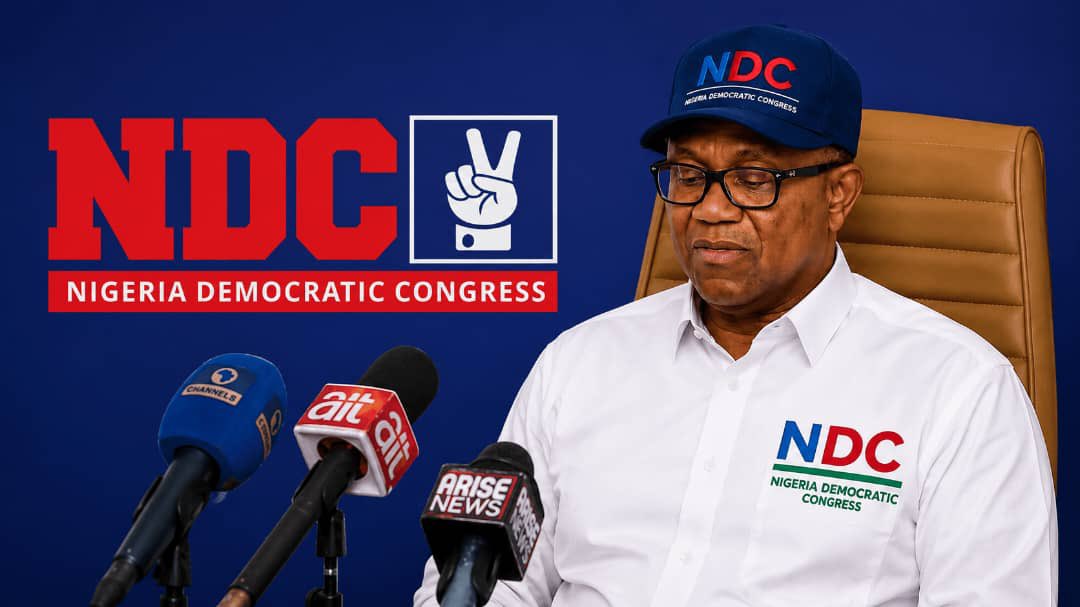
 NDC Wins Logo Battle as Abuja Court Orders INEC to Use Modified Design
 news
news Atiku Exposes Tinubu’s FAAC Scam: Bigger Naira, Poorer Nigerians
 news
news Police Arrest Hafsat Abubakar Over Fake Fintech Shutdown Document Circulated Online
 politics
 Sowore Declares Peter Obi Yelwata Blockade Government-Sponsored Political Attack
How do you feel about this news?
Community Additions
Have a news tip, correction, or extra context about this story? Post it below instantly. All submissions appear live on this screen immediately.